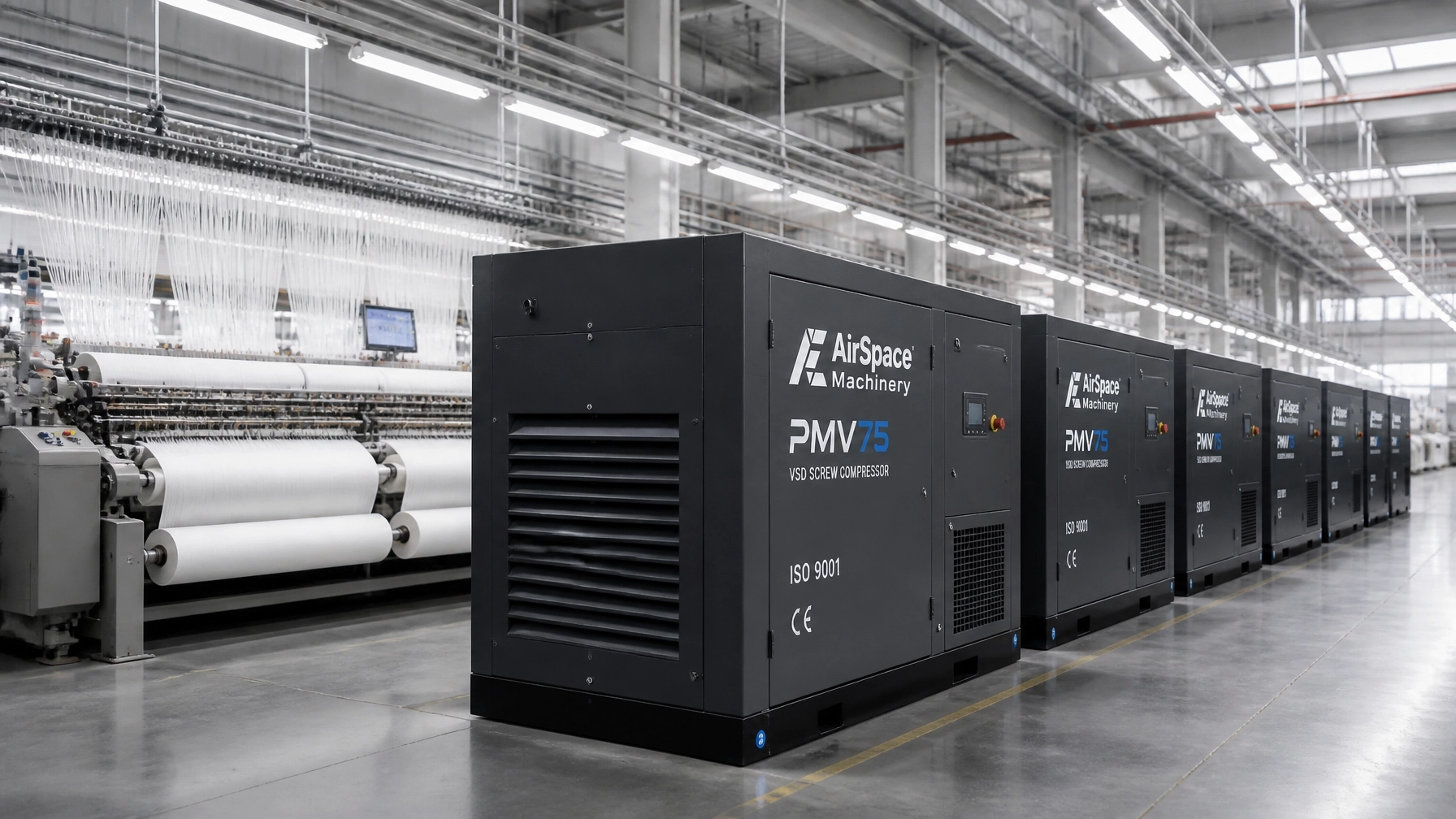
In 2026, air is no longer just "air": it is the "Fourth Utility" that can either make or break a textile mill's margins. In spinning and weaving operations, compressed air typically accounts for 20% to 30% of total energy consumption. Yet, many facilities continue to pay an "Efficiency Tax" due to seven common, avoidable mistakes. By switching to an energy-efficient china made screw air compressor equipped with PM motor technology and AI-driven monitoring, mills are achieving a 35% energy delta compared to legacy systems.
Q: Why is compressed air so critical in modern textile manufacturing?
In textile mills: specifically those operating air-jet looms: compressed air is the lifeblood of production. It powers the main and relay nozzles that carry the weft yarn across the shed. If the air pressure is unstable or the quality is poor, you face yarn breakage, machine downtime, and rejected fabric. However, the biggest threat in 2026 isn't just downtime; it's the hidden cost of wasted energy.
Here are the 7 mistakes currently killing your ROI and how to fix them.
1. Cranking the Pressure to "Fix" Nozzle Trips
The Mistake: When a loom trips due to low pressure at the relay nozzles, the default reaction is to turn up the discharge pressure at the compressor room.
The Technical Reality: This is the most expensive "fix" in manufacturing. For every 1 bar (14.5 psi) you increase your pressure, your compressor energy consumption rises by approximately 7%.
The Solution: Instead of raising the pressure for the entire plant, investigate the local pressure drop. Often, the issue is a clogged filter or a restrictive hose leading to the loom. By maintaining a stable ±0.1 bar pressure via a PMV screw air compressor, you avoid the "Over-Pressure Tax."
2. Sucking in the "Humidity Tax"
The Mistake: Placing the compressor intake inside the hot, humid production hall or near the humidification system.
The Technical Reality: High-speed spinning requires specific humidity levels, but your compressor hates it. Moist air is less dense and requires more energy to compress. Furthermore, it overloads your refrigerated dryers, leading to moisture carry-over into the looms.
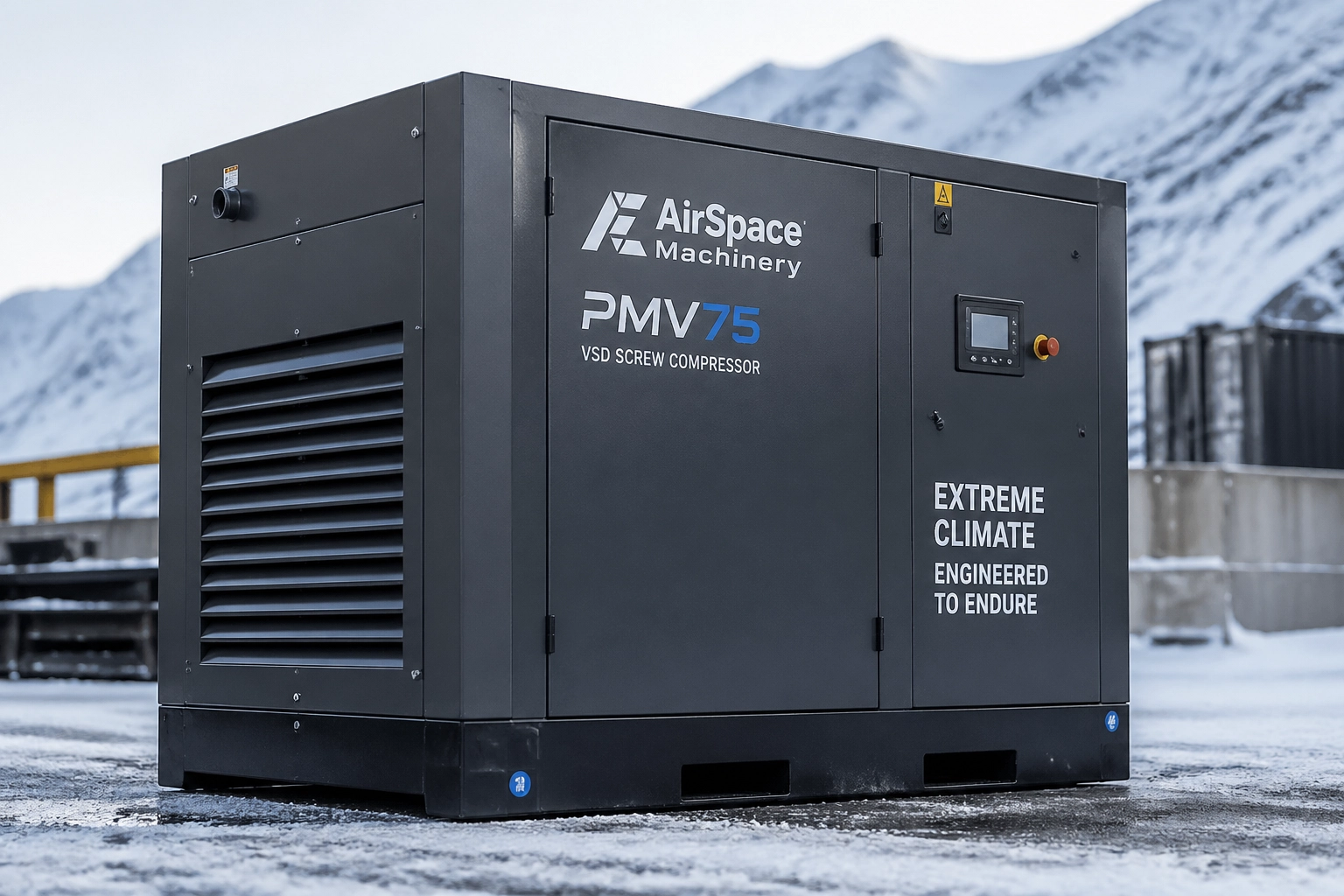
The Solution: Duct your intake air from a cool, dry, external location. Reducing intake air temperature by just 3°C can improve efficiency by 1%. This is a core pillar of our Extreme Climate engineering standards.
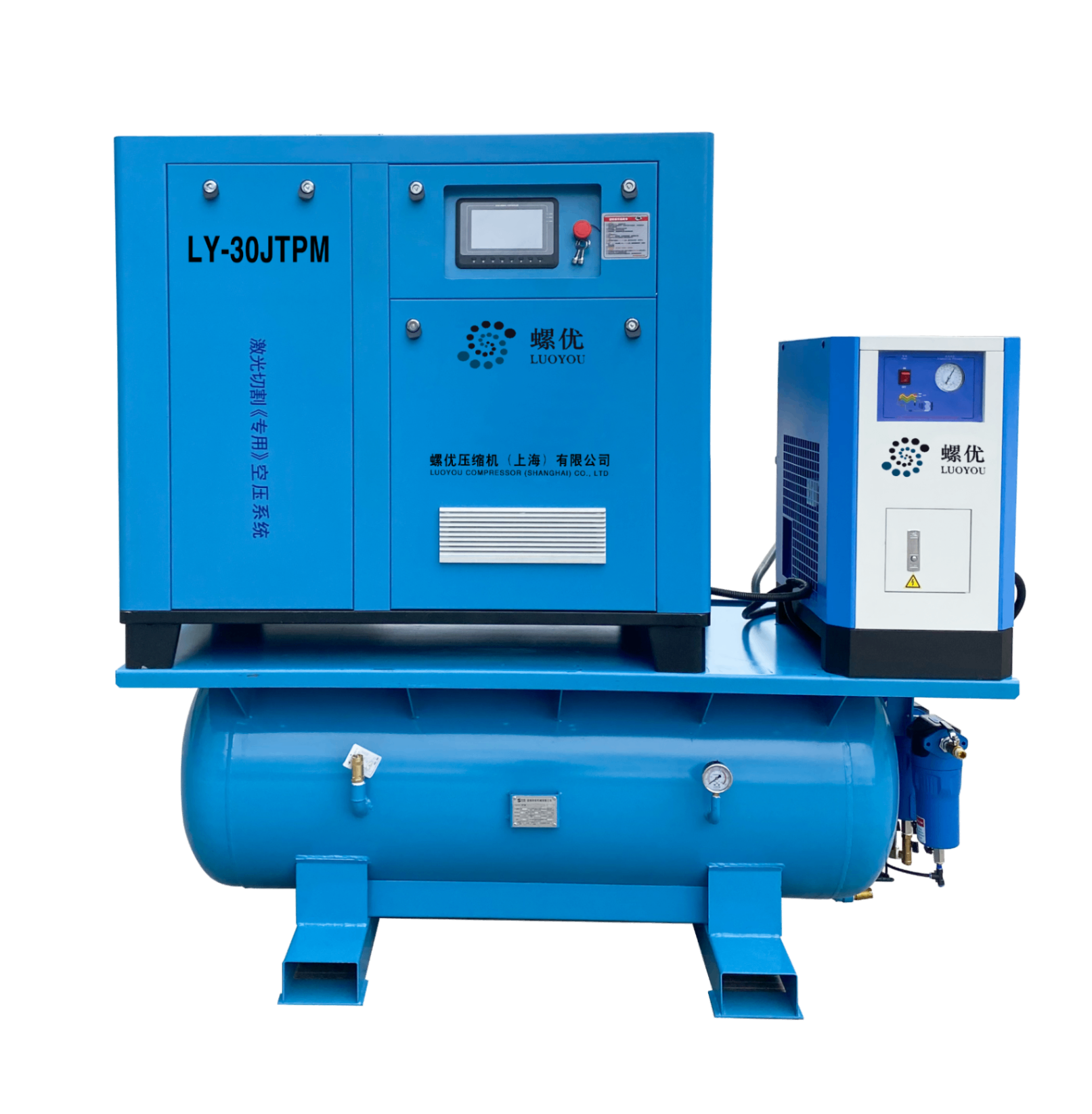
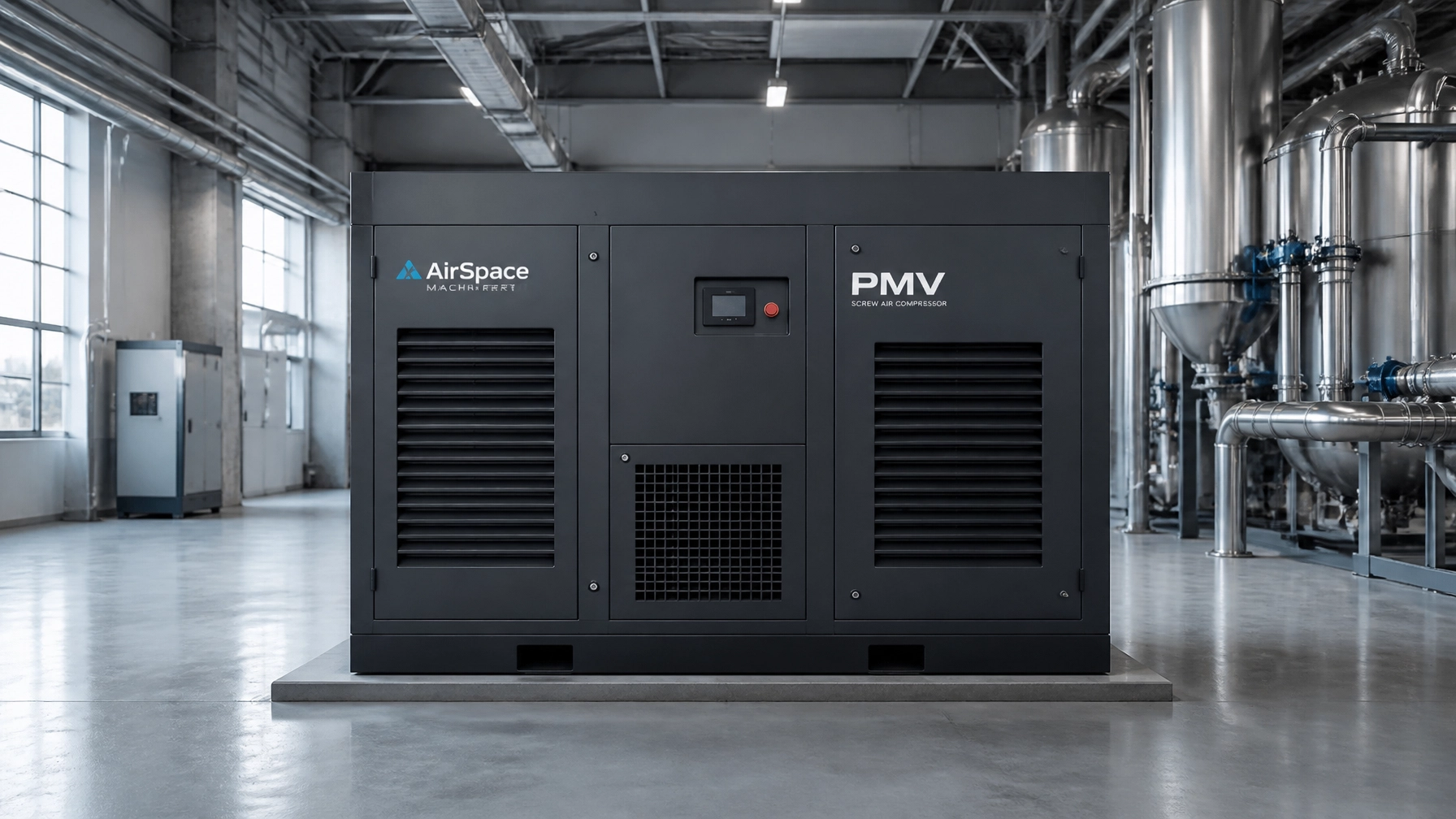
Technical Alt: High-efficiency AirSpace china made screw air compressor with integrated refrigerated dryer and ISO 9001 certification, designed to combat the "Humidity Tax" in textile manufacturing.
3. Ignoring the 0.5 Bar Pressure Drop
The Mistake: Using undersized piping, restrictive couplers, or "generic" fittings that cause a 0.5 bar drop between the compressor and the loom.
The Technical Reality: A 0.5 bar pressure drop is not just a number: it represents a 7% direct increase in your energy bill. Many mills operate "blind" to these drops, assuming the compressor is at fault when the plumbing is the real thief.
The Solution: Upgrade to high-flow aluminum piping and ensure all fittings are sized for the peak CFM of your air-jet looms. We recommend a "Zero Trust" approach to your piping: audit every joint.
4. Paying the "Unload Tax" in Spinning Mills
The Mistake: Using fixed-speed compressors for spinning frames that have fluctuating loads.
The Technical Reality: Fixed-speed compressors continue to consume 30-40% of their full-load power even when they aren't producing air (the "Unload Tax"). In a spinning mill where loads shift frequently, this waste is catastrophic to your 2026 ROI.
The Solution: Implement PM Motor air compressor energy savings. A Permanent Magnet Variable Frequency (PMV) system adjusts its motor speed in real-time to match your air demand, effectively eliminating the unload tax.
5. Starving the Loom Room (Lack of Storage)
The Mistake: Relying solely on the compressor's internal capacity without strategic air receivers near the high-demand loom sections.
The Technical Reality: Air-jet looms create "pulse" demands. Without local storage (buffer tanks), these pulses cause localized pressure drops, leading to false "low pressure" alarms and machine stops.
The Solution: Install secondary air receivers near your loom rooms. This acts as a capacitor for your air system, smoothing out demand spikes and allowing your china made screw air compressor to run at its most efficient point.
6. Ignoring "Ghost" Solenoid Leaks
The Mistake: Only looking for leaks in the main headers while ignoring the hundreds of solenoid valves and relay nozzles on the looms themselves.
The Technical Reality: A single 2mm leak can cost over $1,200 USD per year in wasted energy. In a facility with 200 looms, "ghost leaks" can easily account for 25% of your total air demand.
The Solution: Conduct ultrasonic leak audits during scheduled downtime. Focus on the loom internals where heat and vibration degrade seals faster.
7. Operating Without an "AI Digital Twin"
The Mistake: Managing the compressor room based on manual logs and "gut feel."
The Technical Reality: In 2026, the "Secret Weapon" of top-tier textile manufacturers is the AI Digital Twin. Without real-time data on kW/m³/min, you cannot optimize your system.
The Solution: Use smart controllers that provide cloud-based monitoring. Our AirSpace systems integrate AI to predict maintenance needs and identify efficiency drifts before they hit your balance sheet. This ensures ISO 8573-1 Class 0 Integrity is maintained 24/7.
Q: How does a PM motor air compressor improve textile mill ROI?
Standard induction motors lose efficiency at partial loads. In contrast, the PM motor air compressor energy savings come from the fact that Permanent Magnet motors maintain high efficiency (often IE5 equivalent) even at low speeds. For a textile mill operating at 60-70% average load, this technology delivers the "35% Energy Delta": meaning your energy bill is 35% lower than a mill using old-school fixed-speed technology.
| Feature | Fixed-Speed Compressor | AirSpace PMV Screw Compressor |
|---|---|---|
| Motor Efficiency | IE2 / IE3 | IE5 (Permanent Magnet) |
| Pressure Stability | ±0.5 bar | ±0.1 bar |
| Start-up Current | 6-8x Full Load | Soft Start (No Spike) |
| Energy Waste | High (Unload Tax) | Zero (Matches Demand) |
| 2026 Compliance | Struggling | CE & ISO 9001 Certified |
Q: Is it difficult to switch to a China made screw air compressor?
Not at all. In fact, most global textile hubs (from Uzbekistan to Vietnam) are moving toward Chinese-manufactured systems because they offer the best balance of high-tier components (like BAOSI or Hanbell air ends) and aggressive pricing. At AirSpace Machinery, we support the transition with comprehensive export logistics and technical guidance to ensure your new system meets global ISO 9001 quality standards.
The Bottom Line: Claim Your 35% Energy Delta
The "Industrial Tax" you are paying on inefficient air is profit walking out the door. By fixing these 7 mistakes and upgrading to a modern china made screw air compressor, you aren't just buying a machine: you're securing your facility's competitive edge in the 2026 market.
Ready to stop the "Unload Tax"?
Get a Proposal for a custom-engineered AirSpace PMV system today.
Author: Penny Winston
Expert in The 35% Energy Delta, The Fourth Utility Concept, and ISO 8573-1 Class 0 Integrity.
Reviewed by Engineering