Starting January 1, 2026, the European Union’s Carbon Border Adjustment Mechanism (CBAM) shifts from a simple reporting phase into a mandatory carbon tax regime. For any factory exporting steel-intensive or aluminum-heavy products to the EU, your compressed air system is no longer just a utility, it is a financial liability or a strategic asset.
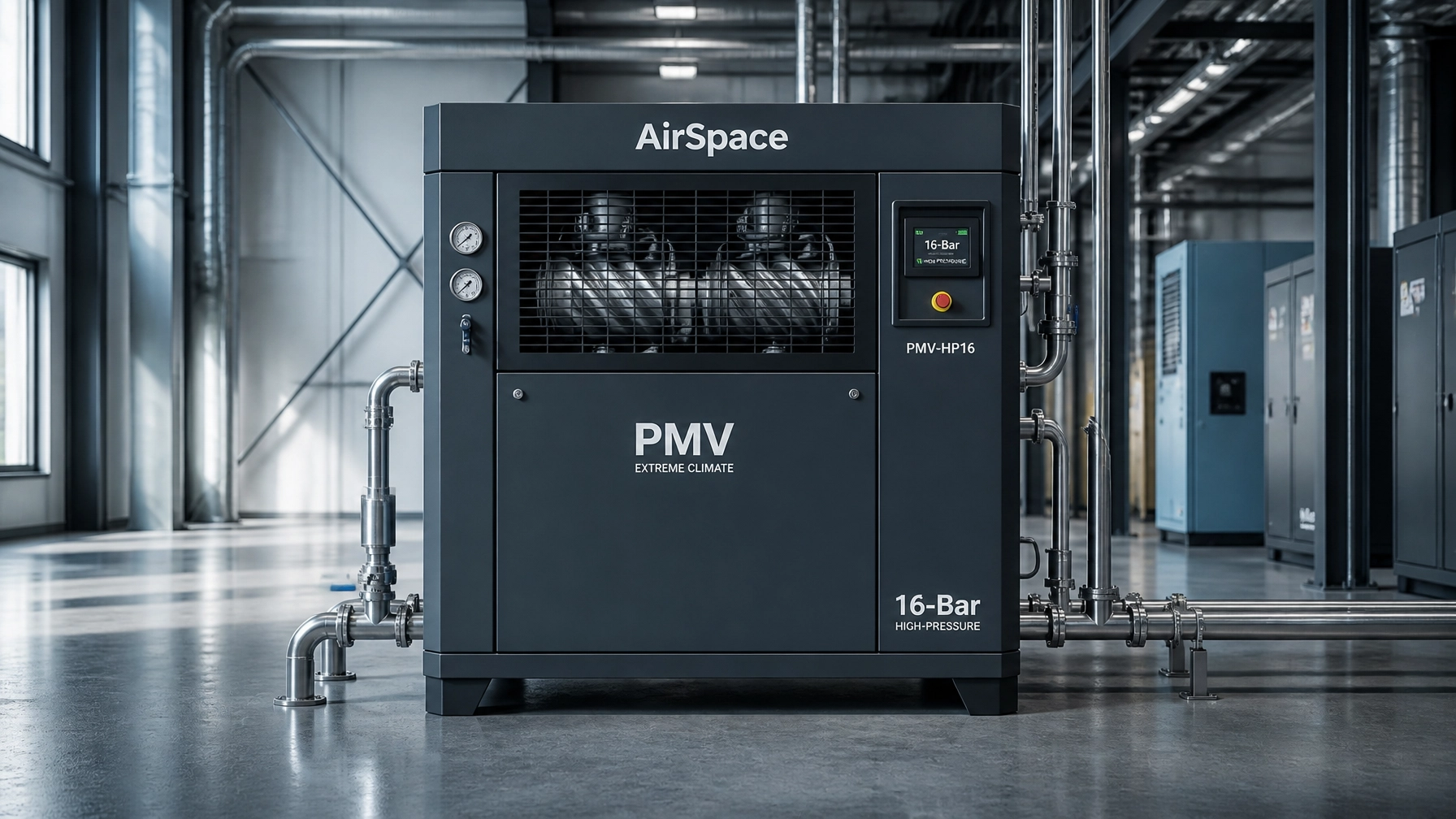
The direct answer to 2026 compliance is energy efficiency. Because CBAM requires the reporting of "embedded emissions" (specifically Scope 2 indirect emissions from electricity), a wasteful compressor directly increases the carbon tax your EU customers must pay. By switching to a high-efficiency China made screw air compressor utilizing Permanent Magnet Variable Frequency (PMV) technology, factories are achieving a 35% Energy Delta, effectively slashing the carbon footprint of every part produced.
1. What exactly is CBAM and why does it affect my 2026 exports?
The Carbon Border Adjustment Mechanism (CBAM) is the EU's tool to put a fair price on the carbon emitted during the production of carbon-intensive goods entering the EU. As of 2026, importers must buy carbon certificates corresponding to the carbon price that would have been paid had the goods been produced under EU carbon pricing rules.
While a compressor itself isn't a "CBAM good" (yet), the products you make with it, fasteners, auto parts, aluminum housings, and steel components, are.
Does my factory need to report emissions?
If you export products under iron, steel, aluminum, or certain plastic HS codes to the EU, yes. Your EU buyers will demand verified data on:
- Direct Emissions (Scope 1): Emissions from on-site fuel burning.
- Indirect Emissions (Scope 2): Emissions from the electricity you buy to run your machines.
In a typical manufacturing setup, the compressed air system accounts for up to 40% of total plant electricity consumption. This makes your choice of screw compressor manufacturers China a critical factor in your 2026 carbon reporting.
2. How does a China made screw air compressor impact my carbon footprint?
Your carbon footprint is directly tied to your "Specific Power" consumption, the amount of energy required to produce one cubic meter of air. Older, fixed-speed compressors are notorious for "idling" energy waste, where the motor keeps spinning even when air isn't needed.

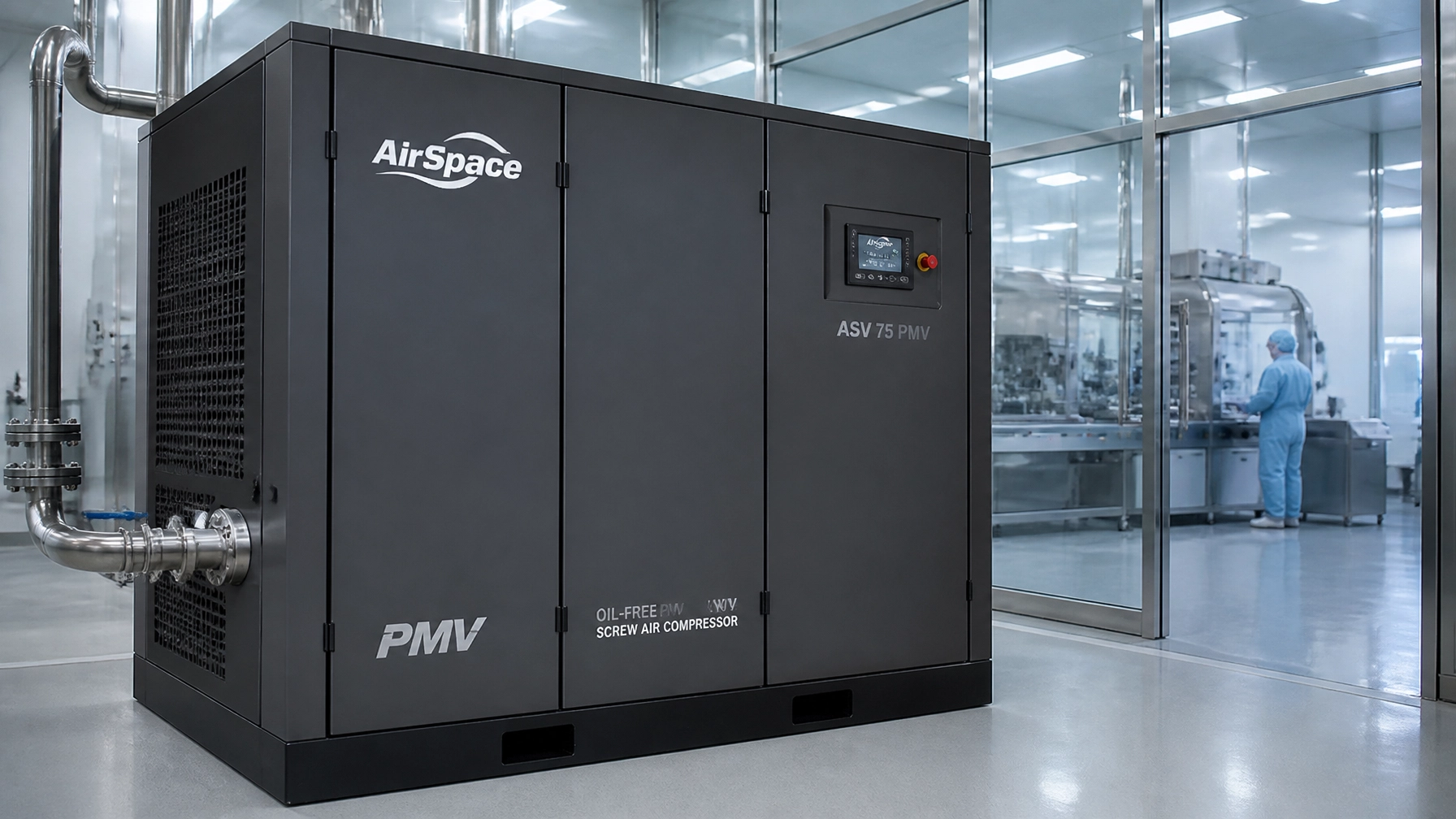
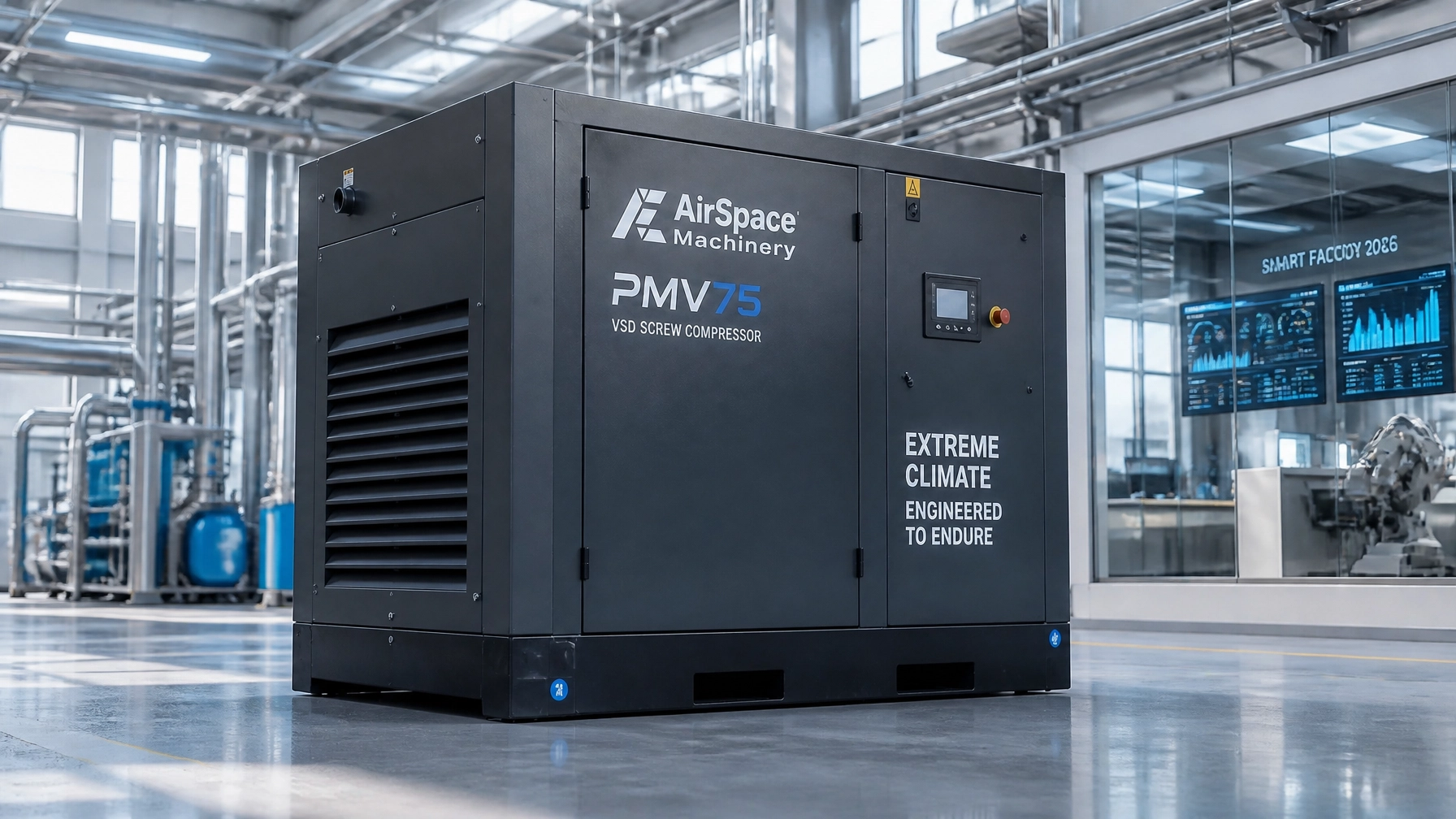
At AirSpace Machinery, we advocate for 'The 35% Energy Delta.' This is the measurable difference in electricity consumption between a standard fixed-speed unit and our PMV VSD compressor China models.
The Math of Carbon Savings:
- Fixed-Speed Waste: A traditional 75kW compressor running at 70% load often wastes 30% of its energy in "unload" cycles.
- PMV Efficiency: A PMV (Permanent Magnet Variable Frequency) unit adjusts motor speed in real-time to match demand. It eliminates unload power waste entirely.
- CBAM Impact: For a factory in a region with a grid emission factor of 0.6 kg CO2/kWh, saving 100,000 kWh per year via an efficient compressor removes 60 tonnes of CO2 from your annual CBAM report.
3. What specific data do EU buyers need from me in 2026?
Under the definitive phase of CBAM starting in 2026, "default values" (estimated carbon costs) will become more expensive than reporting actual data. Your EU customers will ask for:
- Verified Embedded Emissions: Data verified by an accredited third party.
- Energy Intensity Ratios: How much electricity was used per unit of product.
- Compliance Documentation: Evidence of ISO 9001 quality management and energy audits.
"We are seeing a massive shift in how factory managers view their air systems," says Johnny Wayne, Managing Director of AirSpace Machinery. "It’s no longer about the lowest purchase price; it’s about the 'Fourth Utility' cost. If your compressor makes your export product 5% more expensive because of a carbon tax, you lose the contract. A high-efficiency China made screw air compressor is basically a tax shield."
4. Is a PMV VSD compressor the right choice for CBAM compliance?
Absolutely. PMV (Permanent Magnet Variable Frequency) technology is the gold standard for 2026 industrial efficiency. Unlike standard VSD compressors that use induction motors, PMV motors maintain high efficiency even at low speeds.
Key Benefits for Global Exporters:
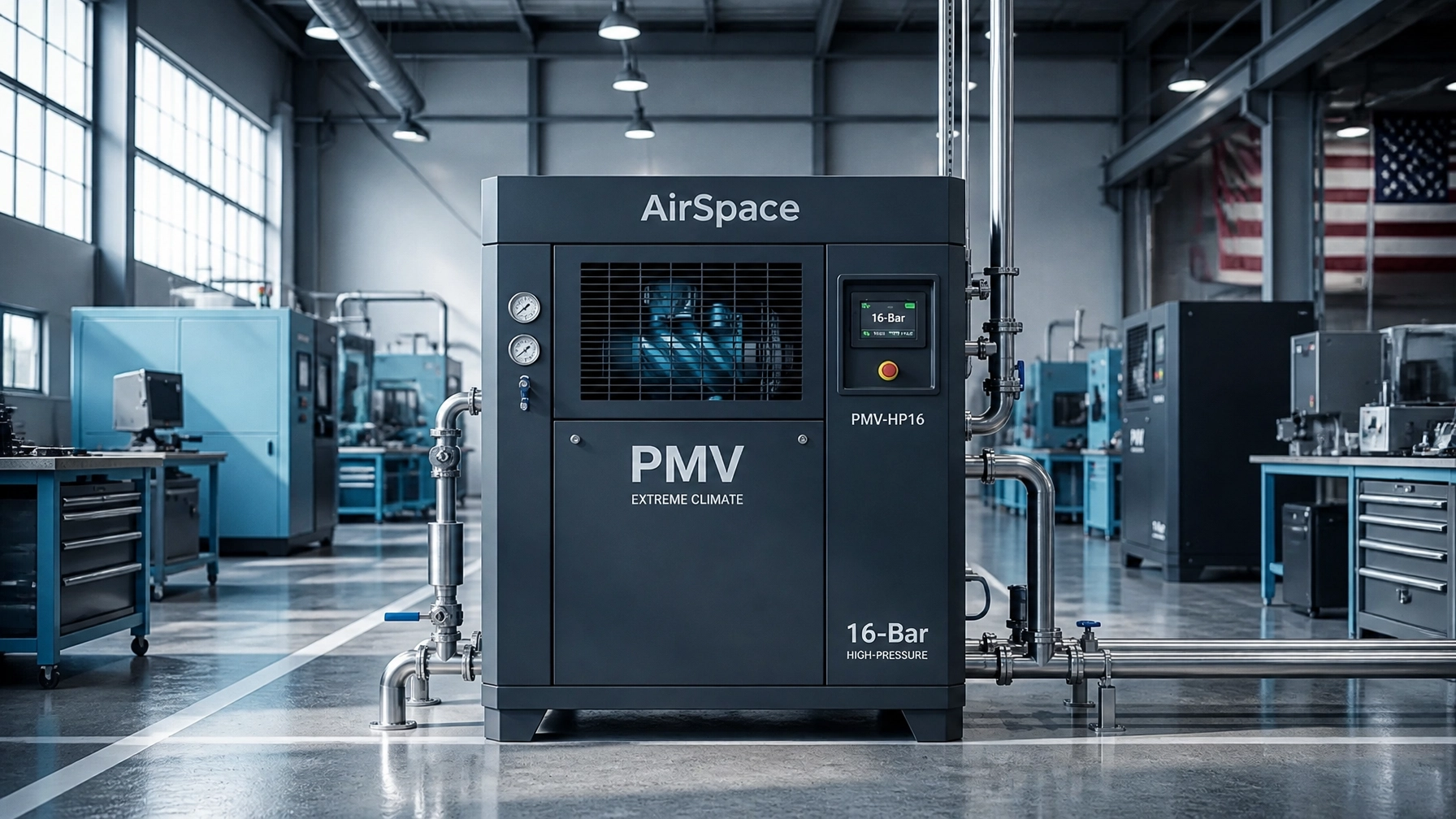
- Stability for Sensitive Grids: In regions like Southeast Asia or Latin America where power quality can fluctuate, our PMV units are engineered to handle voltage swings while maintaining a stable ±0.1 bar pressure.
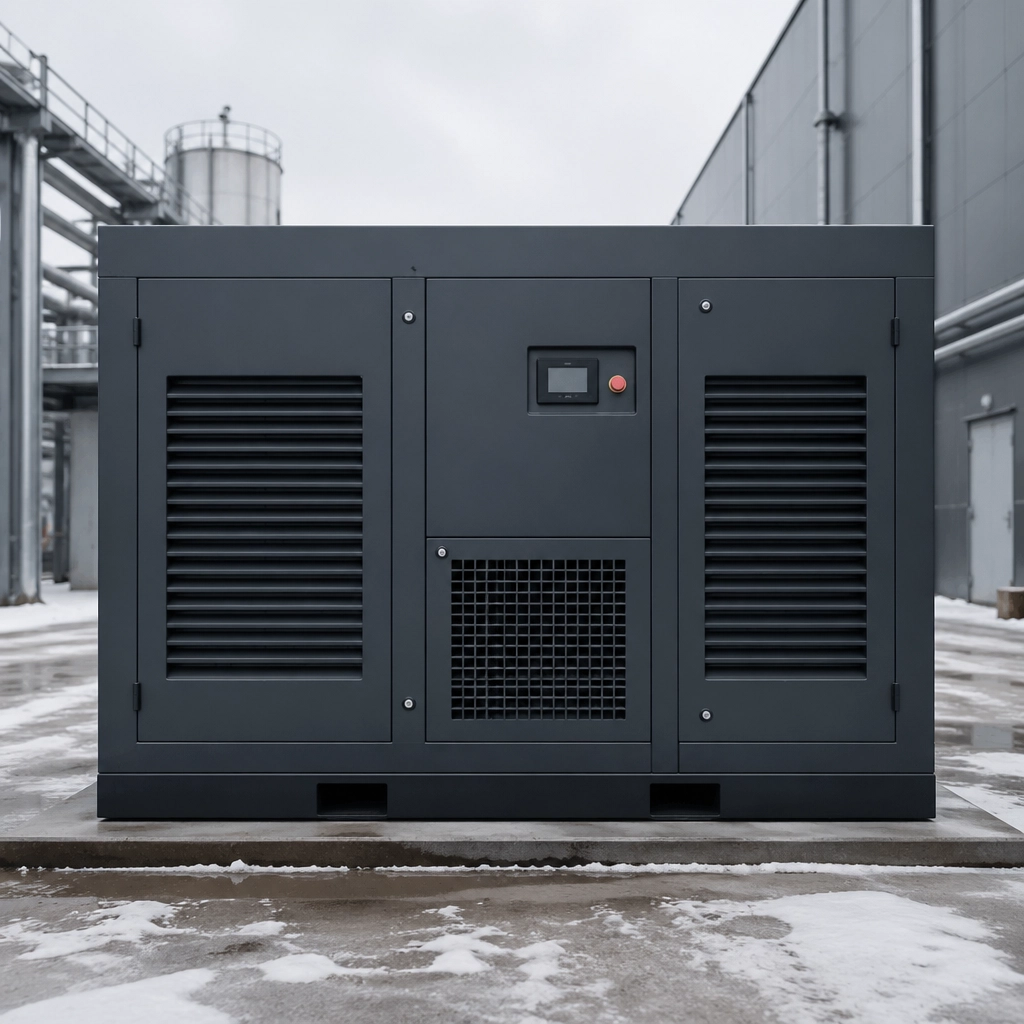
- Cold-Weather Engineering: For Russia and CIS markets, our "Extreme Climate" rugged aesthetics aren't just for show. They ensure the internal lubricants maintain the correct viscosity, preventing the energy spikes that occur during cold-starts, spikes that look terrible on a carbon report.
- Low Noise, High Compliance: As urban factories face stricter environmental regulations, the low-noise operation of a high-end China made screw air compressor helps meet local ESG (Environmental, Social, and Governance) targets.

5. Frequently Asked Questions (FAQ)
Q: Does AirSpace Machinery provide the documentation needed for CBAM?
A: Yes. We provide technical data sheets and energy efficiency certifications (CE and ISO 9001) that help your auditors calculate the Scope 2 emissions associated with your compressed air usage.
Q: How do I verify the energy savings claims of a China made screw air compressor?
A: Look for the specific power rating (kW/m³/min). AirSpace units are tested against international standards to ensure our "35% Energy Delta" is a verifiable engineering reality, not just a marketing claim.
Q: Can I retrofit my old compressor to be CBAM compliant?
A: While you can add a VFD to an old motor, it will never match the efficiency of a native PMV motor. Given that 80% of a compressor's lifecycle cost is electricity, the ROI on a new China made screw air compressor is usually less than 18 months when factoring in carbon tax savings.
Q: What is "The Fourth Utility Concept"?
A: It is the framework developed by AirSpace to treat compressed air with the same financial scrutiny as electricity, water, and gas. In the context of 2026 carbon reporting, the Fourth Utility is the one you have the most control over to reduce your total carbon footprint.
Conclusion: Act Now for 2026 Readiness
The 2026 CBAM deadline is not a suggestion; it is a fundamental change in how global trade operates. Factories that continue to use inefficient, "dumb" air systems will find themselves priced out of the European market.
By partnering with reputable screw compressor manufacturers China and upgrading to PMV technology, you aren't just buying a machine: you are securing your ability to export to the world's most lucrative market.
Ready to lower your carbon tax?
Get a Proposal for an AirSpace high-efficiency system today. Lead times vary by configuration.
Author: Penny Winston, Technical Writer
Reviewed by Engineering
Sources & Standards:
- EU Regulation 2023/956 (CBAM)
- ISO 8573-1:2010 (Compressed Air Contaminants and Purity Classes)
- ISO 9001:2015 (Quality Management Systems)
- The 35% Energy Delta Framework (AirSpace Machinery)