What is the most accurate way to size an industrial air compressor without overbuying?
What is the most accurate way to size an industrial air compressor without overbuying?
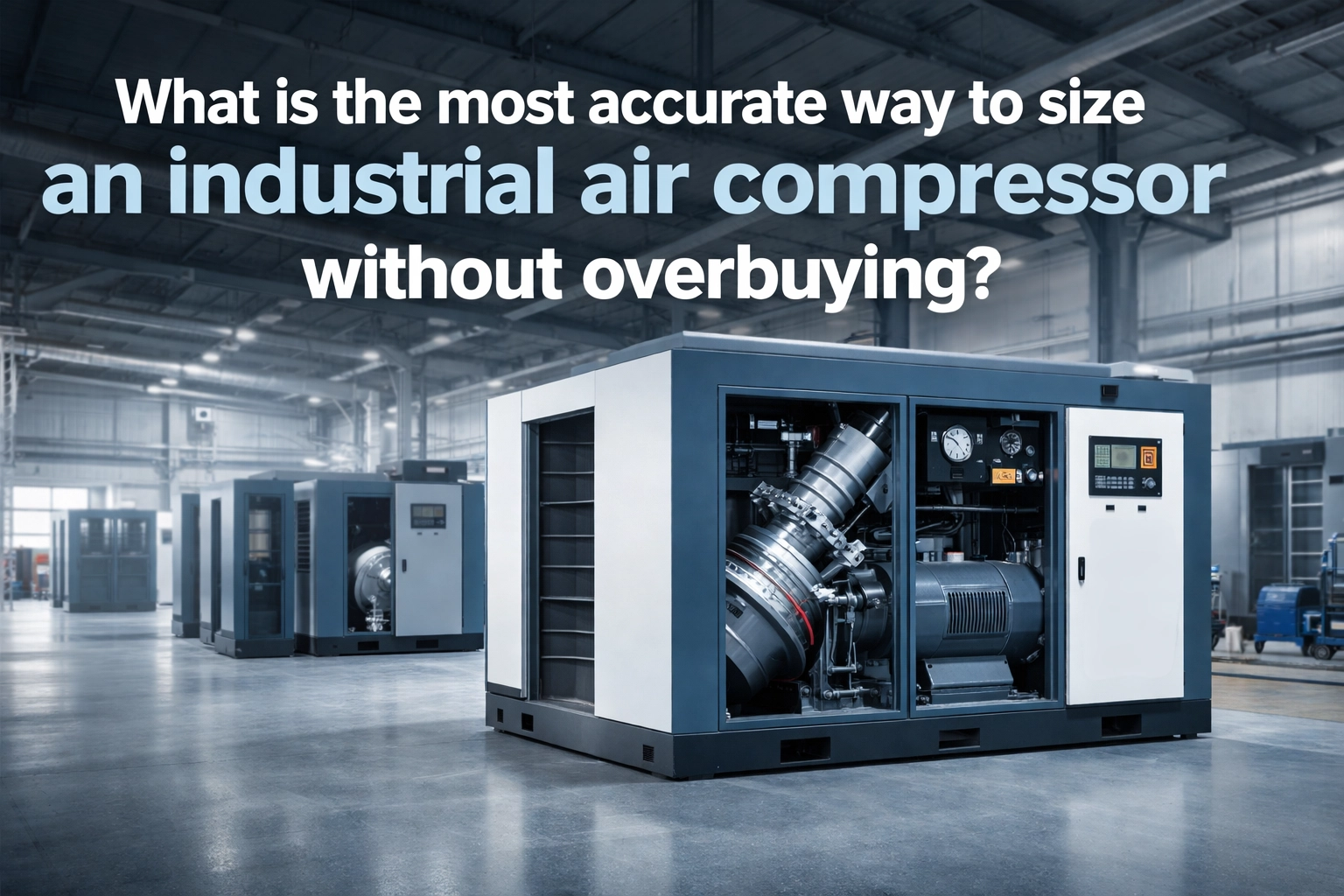
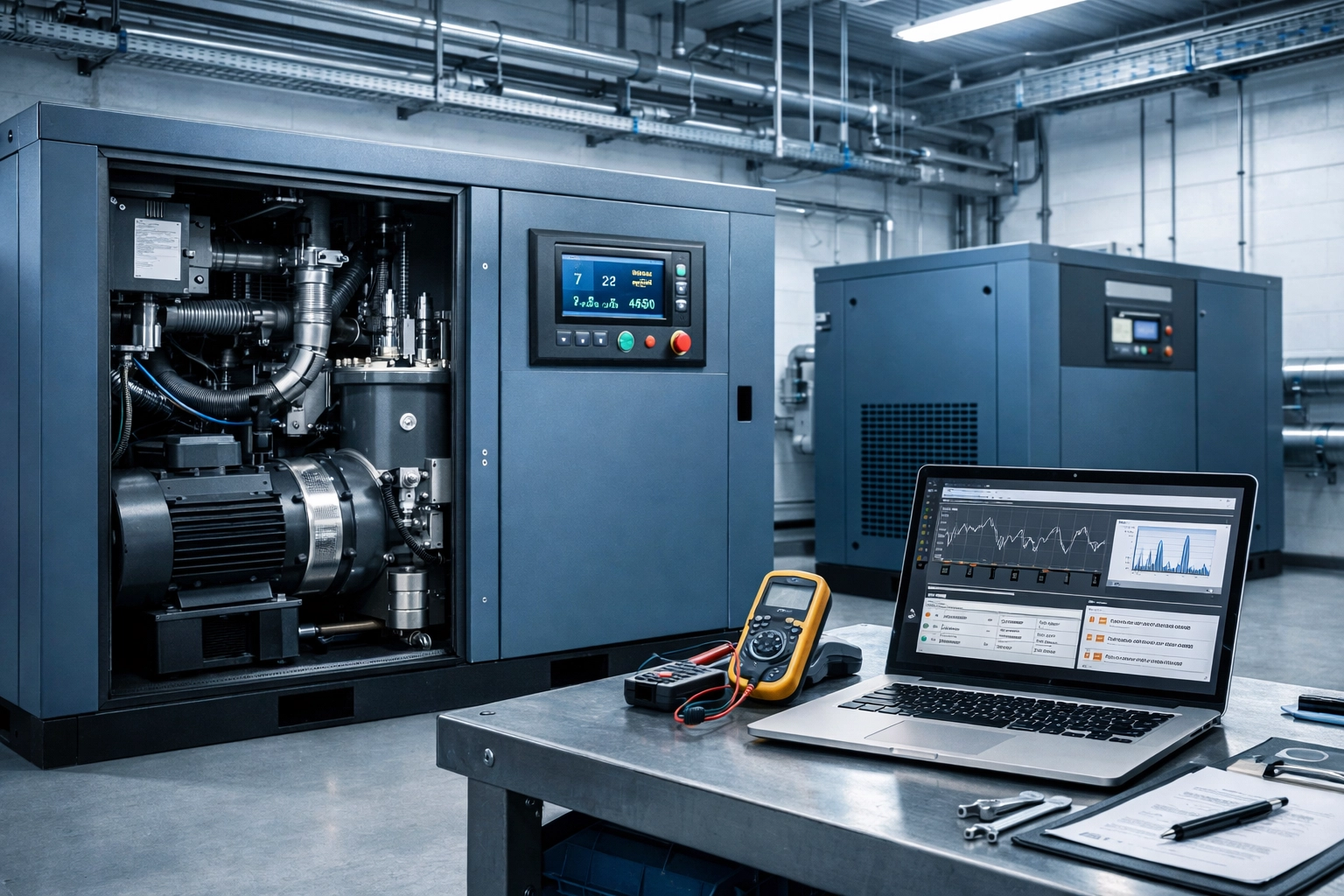
Direct answer: Measure or calculate your real peak demand in SCFM at your required operating pressure (PSI/bar), then select an Energy-Efficient Air Compressor (screw type) that covers that peak with a modest 15 to 25 percent margin, and use a PMV (Permanent Magnet Variable Frequency) screw air compressor when demand swings during the shift so you do not pay for unused capacity. In practice, the most accurate approach is a demand study (flow logging at the main header) plus a simultaneous-use equipment list, then choosing capacity based on peak production, not nameplate totals.
Oversizing remains one of the most expensive errors in compressed air system design. An oversized compressor cycles excessively, operates inefficiently at part-load, and wastes energy dollars every hour it runs. At AirSpace Machinery Co., Ltd., we manufacture screw-type industrial compression systems with 20 years of engineering excellence, a 4000m² facility, and 100 million yuan annual sales, and we help global buyers right-size compressed air systems using documented demand profiling and equipment-based calculations. E-E-A-T note: this guidance reflects our engineering application experience specifying PMV screw air compressors, dryers, and receiver tanks for automotive, electronics, pharma, food, and general manufacturing plants, and it aligns with common industry test and measurement standards listed in the Technical Standards and Sources section below.
Why Oversizing Costs More Than You Think
An oversized air compressor does not simply provide extra capacity: it actively drains your operating budget. Fixed-speed screw compressors running at partial load consume disproportionate energy relative to their output. A compressor sized at 150% of actual demand may operate at 50-60% load most of the time, wasting 20-30% of input energy through inefficient part-load operation.
The financial impact compounds over the equipment lifecycle. Energy typically accounts for 70-80% of total compressor ownership costs over a ten-year period. An energy-efficient air compressor sized correctly for your application delivers substantial savings compared to an oversized unit running inefficiently.
Beyond energy waste, oversized compressors experience accelerated wear from frequent cycling, higher maintenance costs, and shorter service life. The initial capital savings from buying smaller, properly sized equipment often pale in comparison to the operational savings achieved over years of use.
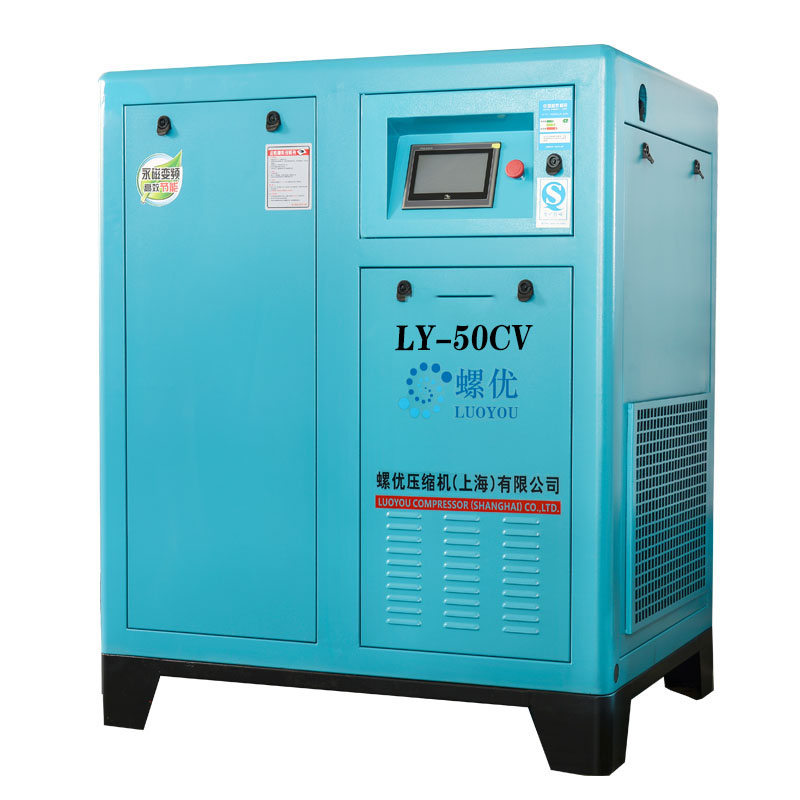
How to Calculate Your Actual Air Demand in CFM
Accurate demand calculation starts with a complete equipment inventory. Document every pneumatic tool, machine, and process that consumes compressed air in your facility. For each piece of equipment, record the CFM (cubic feet per minute) requirement and operating PSI from manufacturer specifications.
Follow this step-by-step process for accurate sizing:
Step 1: List all air-consuming equipment. Include production machinery, pneumatic tools, blow-off stations, packaging equipment, and any other compressed air users.
Step 2: Record individual CFM requirements. Check product manuals, nameplates, or manufacturer websites. If specifications list SCFM (standard CFM), note this separately from ACFM (actual CFM) as conversion may be necessary depending on your inlet conditions.
Step 3: Determine simultaneous usage. Not all equipment runs continuously. Calculate your peak demand by adding CFM requirements for tools and machines that operate simultaneously during maximum production.
Step 4: Identify your pressure requirement. Find the highest PSI requirement among all equipment. This determines your system pressure rating. Common industrial applications require 100-125 PSI (7-8.6 bar).
Step 5: Add a 25% buffer. This margin accounts for calculation errors, small leaks, and minor future additions. For facilities planning significant expansion, increase this buffer accordingly.
For example, if your simultaneous equipment demand totals 400 CFM at 100 PSI, your target compressor capacity should be approximately 500 CFM to provide adequate margin.
Planning for Future Growth Without Overbuying Today
Future capacity planning requires balancing current needs against projected expansion. The key is avoiding the trap of buying for hypothetical growth that may never materialize while ensuring your system can scale when needed.
A practical approach uses modular system design. Rather than purchasing one oversized compressor for potential future demand, consider installing capacity that meets current needs plus 25% growth margin. When expansion occurs, add a second unit to create a baseload and trim configuration.
This N+1 arrangement offers multiple advantages. The primary compressor handles baseload demand efficiently. A second unit provides trim capacity for peak periods and serves as backup during maintenance. This configuration delivers redundancy without the energy waste of a single oversized machine.
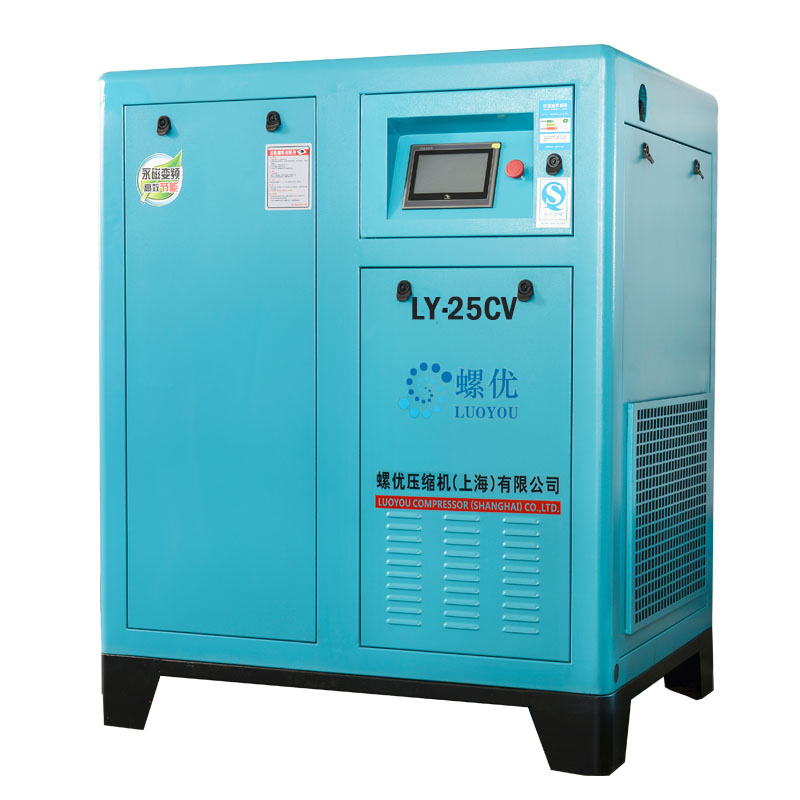
Why VSD and PMV Technology Solves Fluctuating Load Problems
Variable Speed Drive (VSD) and Permanent Magnet Variable Frequency (PMV) screw air compressors provide the ideal solution for facilities with fluctuating air demand. These technologies adjust motor speed to match real-time compressed air requirements, delivering only the CFM needed at any given moment.
PMV technology delivers measurable energy savings under specific conditions. When demand fluctuates between 40-80% of rated capacity: common in manufacturing environments with variable production schedules: PMV compressors can reduce energy consumption by 30-50% compared to fixed-speed alternatives operating under the same conditions.
Fixed-speed compressors face a fundamental efficiency challenge called the control gap. This pressure range exists where neither fully loaded nor unloaded operation matches demand efficiently, resulting in unstable plant pressure and wasted energy. VSD and PMV compressors eliminate this control gap by continuously modulating output.
AirSpace Machinery manufactures PMV screw air compressors ranging from 7.5kW to 250kW, all featuring CE marking and ISO 9001 certification. Our 4000m² manufacturing facility produces energy-efficient air compressor systems designed for global industrial applications with pressure options from 7 bar to 13 bar (100-188 PSI).
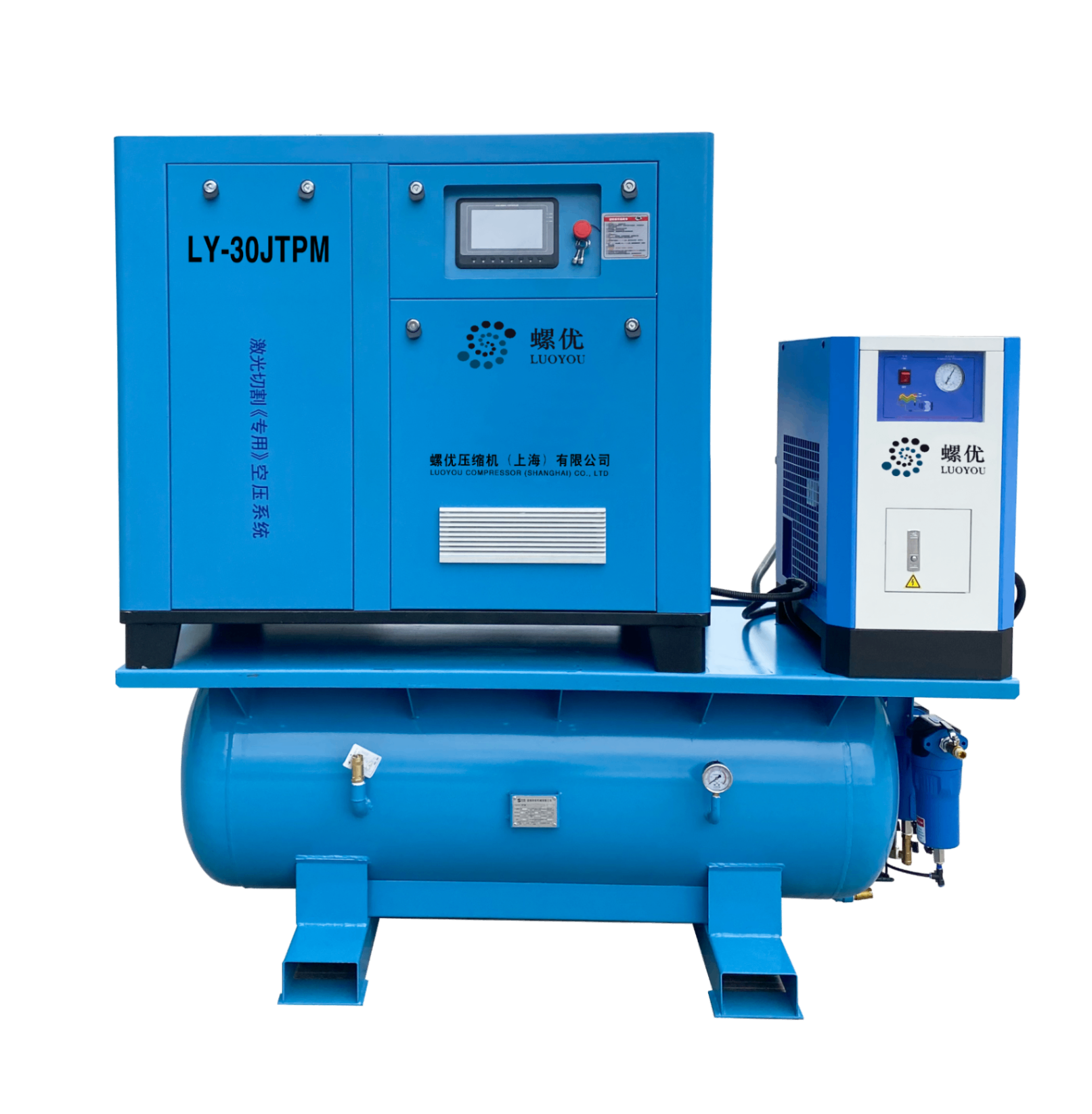
The Baseload, Trim, and Backup Configuration Explained
Industrial best practice uses a multi-compressor arrangement to optimize efficiency and ensure reliability. This configuration typically includes:
Baseload compressor: A fixed-speed unit sized to handle minimum continuous demand. This machine runs fully loaded during production hours, operating at peak efficiency.
Trim compressor: A VSD or PMV unit that adjusts output to match demand fluctuations above baseload. This compressor handles the variable portion of your air requirement.
Backup capacity: Either the trim unit or a dedicated standby compressor provides redundancy. This ensures compressed air availability during maintenance or unexpected equipment issues.
This arrangement prevents any single compressor from operating at inefficient part-load while providing the flexibility to handle demand variations. For facilities with consistent demand patterns, a single properly sized PMV compressor may serve as both baseload and trim, simplifying the system while maintaining efficiency.
Receiver Tank Sizing Guidelines
Proper air receiver tank sizing supports stable system pressure and reduces compressor cycling. The industry standard recommends a minimum of five gallons of storage capacity per CFM of compressor output.
For a 500 CFM system, this translates to a minimum 2,500-gallon (approximately 9,500-liter) receiver tank. Larger tanks provide additional benefits including greater pressure stability, reduced cycling frequency, and improved ability to handle short-duration peak demands without starting additional compressors.
Verifying Equipment Certifications for International Buyers
Global buyers should verify CE marking and ISO 9001 certification when selecting compressed air equipment. CE marking indicates compliance with European health, safety, and environmental requirements. ISO 9001 certification confirms the manufacturer maintains quality management systems meeting international standards.
AirSpace Machinery provides full documentation for CE and ISO 9001 certifications with every compressor shipment. Our export support team assists international customers with logistics coordination and technical documentation requirements. For guidance on verifying certifications when importing industrial equipment, visit our certification verification guide.
Technical Standards and Sources
CFM and SCFM measurement standards follow Compressed Air and Gas Institute (CAGI) guidelines. Compressor performance testing adheres to ISO 1217 standards for displacement compressors. Air quality classifications reference ISO 8573-1 for purity specifications. The 25% buffer recommendation and five-gallon-per-CFM tank sizing guideline represent widely accepted industry practice documented by CAGI and major compressor manufacturers.
Get a Proposal for Your Application
Ready to size your compressed air system accurately? Contact AirSpace Machinery for a detailed proposal based on your specific requirements. Our engineering team analyzes your demand profile, recommends appropriate equipment configurations, and provides complete specifications for energy-efficient air compressor systems.
Pressure and flow requirements (bar/psi and m³/min or CFM) are mandatory for accurate proposals. Lead time depends on configuration and current production schedules.
Request your proposal at chinacompressor.org
Reviewed by Engineering
Author: Penny Winston | AirSpace Machinery
Penny is a technical content specialist at AirSpace Machinery Co., Ltd., focusing on compressed air system optimization and energy efficiency topics for global industrial audiences.