Author: Penny Winston | AirSpace Machinery Co., Ltd.
If you work in manufacturing, pharmaceuticals, food processing, or any industry that relies on compressed air, you have probably heard someone mention ISO 8573-1. Maybe during an audit. Maybe when spec’ing out a new energy-efficient air compressor system. And somewhere along the line, someone probably threw around the term “Class 0” like it was the gold standard of clean air.
But here is the thing most people get wrong: Class 0 does not mean zero contamination.
Let me break this down in plain terms so you know exactly what you are dealing with, and what questions to ask before your next equipment purchase or facility audit.
What Is ISO 8573-1 and Why Does It Matter
ISO 8573-1 is an international standard that defines compressed air purity by measuring contaminants in the air stream. Think of it as a universal language for air quality. Whether you are operating a facility in Shanghai, Stuttgart, or São Paulo, this standard gives everyone the same framework for talking about clean air.
The standard classifies air quality across three contaminant types using a simple ABC system:
A , Solid particles (dust, rust, pipe scale)
B , Water and humidity (measured as pressure dew point)
C , Oil content (both aerosol and vapor)
Each contaminant type receives a class rating. Class 1 is stricter than Class 2. Class 2 is stricter than Class 3. And so on, all the way down to Class 9, which is the most relaxed specification.
So when someone hands you a spec sheet that says “1.2.1,” they are telling you:
Class 1 for particles, Class 2 for water, and Class 1 for oil.
Simple enough, right? Now let us talk about where things get tricky.
The Class 0 Misconception Everyone Gets Wrong
Here is where most engineers, purchasing managers, and even some auditors stumble.
Class 0 does not mean zero contamination or oil-free air.
This is one of the most widespread misconceptions in the compressed air industry. Class 0 simply indicates that the air is cleaner than Class 1 for the specific contaminant being measured. That is it.
The critical catch? Class 0 requires a written specification that clearly states the exact contamination levels allowed. Without this documented specification, Class 0 is essentially meaningless. It is an empty label unless accompanied by precise numbers that define what “cleaner than Class 1” actually looks like for your application.
If a supplier tells you their system delivers Class 0 air but cannot produce a written specification with exact contamination limits, you should ask more questions. The standard demands this documentation, and it must be included in all technical materials, purchase orders, and audit records.
Why This Matters for Your Manufacturing Operation
Different applications require different air quality classes. A pharmaceutical clean room has vastly different requirements than a general fabrication shop. Food and beverage processing often demands Class 0 or Class 1 specifications for oil content to prevent product contamination. Electronics manufacturing needs extremely low particle counts.
Meanwhile, general industrial applications: like powering pneumatic tools or operating basic automation equipment: may function perfectly well with Class 4 or Class 5 air.
The point is this: specifying air quality is not about chasing the lowest class number. It is about matching your compressed air system to your actual process requirements.
Over-specifying air quality means spending money on filtration, drying, and maintenance that you do not need. Under-specifying means risking product contamination, equipment damage, or failed audits.

How to Read an ISO 8573-1 Specification
When you see a compressed air quality specification written as three numbers separated by periods (like 1.4.1 or 2.2.2), here is what you are looking at:
First number : Particle class (solid contaminants)
Second number : Water class (humidity/dew point)
Third number : Oil class (total oil content including aerosol and vapor)
The standard uses detailed tables that specify maximum particle counts per cubic meter, pressure dew points at specific temperatures, and oil content measured in milligrams per cubic meter.
For example, Class 1 for particles allows a maximum of 20,000 particles per cubic meter at 0.1 to 0.5 microns. Class 1 for oil allows a maximum total oil content of 0.01 mg/m³.
When Class 0 is specified, those numbers must be explicitly documented and agreed upon between buyer and supplier. There is no pre-defined table for Class 0: the specification must be written and attached to the order.
Selecting the Right Equipment for Your Air Quality Requirements
Meeting ISO 8573-1 specifications requires the right combination of compression, filtration, and drying equipment. This is where your equipment selection directly impacts your ability to hit your target air quality class.
For applications requiring Class 1 or Class 0 oil specifications, many facilities turn to oil-free screw compressors or oil-injected screw compressors paired with multi-stage filtration and activated carbon adsorbers.
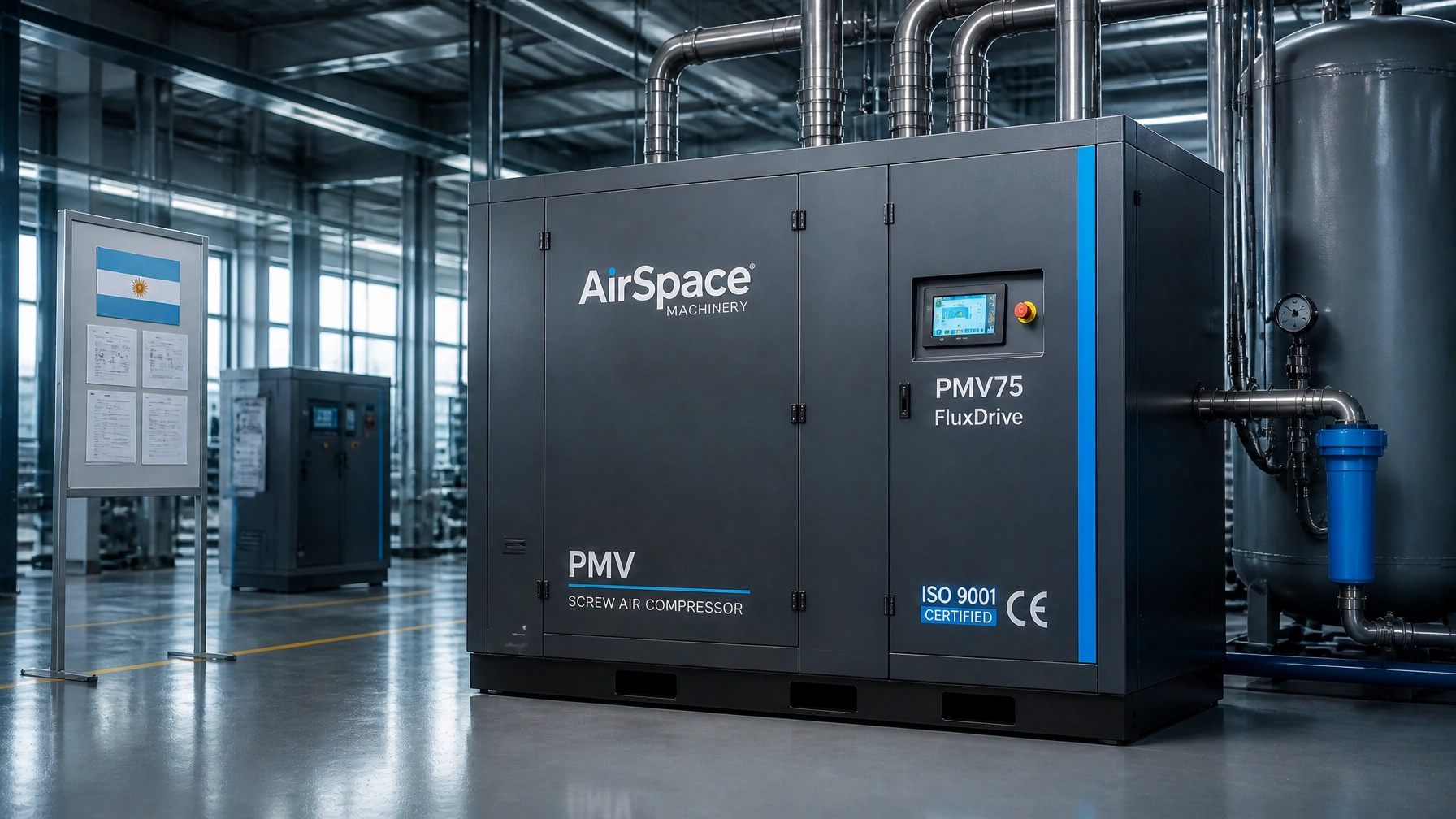
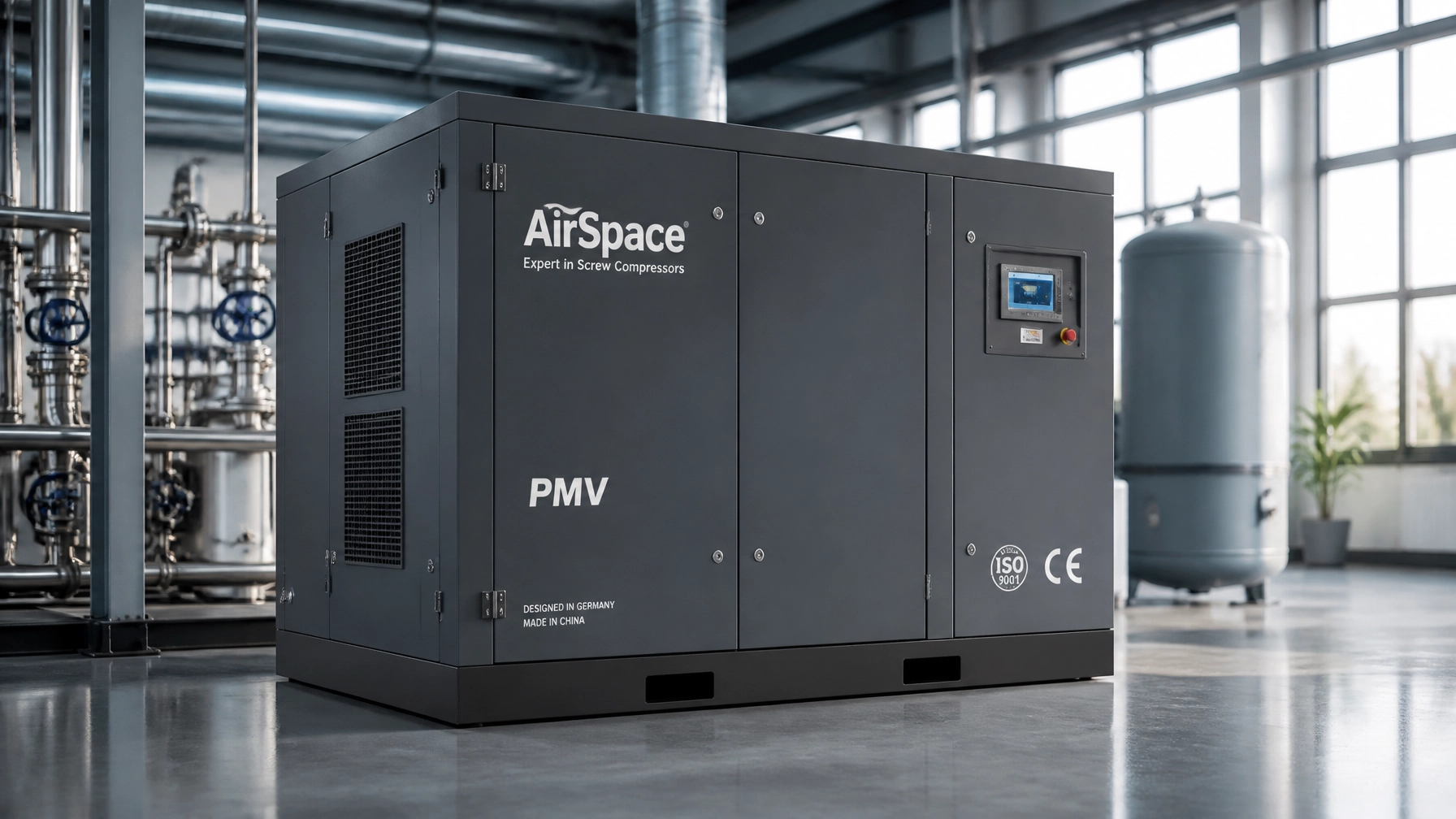
Modern Permanent Magnet Variable Frequency (PMV) screw air compressors deliver consistent pressure and flow while optimizing energy consumption. When paired with properly sized refrigerated or desiccant air dryers, these systems can reliably achieve the water class specifications your process demands.
At AirSpace Machinery, our production facility spans over 4,000 square meters dedicated to manufacturing energy-efficient air compressor systems that meet CE and ISO 9001 quality standards. Our engineering team works with customers to match system configurations to their specific ISO 8573-1 requirements.
Practical Steps Before Your Next Audit or Equipment Purchase
- Define your actual air quality requirements based on your process, not based on what sounds impressive. Talk to your quality team and your equipment suppliers.
- Request written Class 0 specifications if anyone claims Class 0 compliance. No written spec means no Class 0.
- Document everything. Auditors want to see that your system design, maintenance records, and testing results all align with your stated air quality class.
- Test your air regularly. ISO 8573-1 compliance is not a one-time achievement. Filters degrade. Dryers lose efficiency. Regular testing keeps you compliant.
- Work with suppliers who understand the standard. If your compressor vendor cannot explain the difference between Class 1 and Class 0, find one who can.
The Bottom Line on ISO 8573-1 and Class 0
ISO 8573-1 provides a universal language for defining compressed air quality. Understanding the ABC classification system: particles, water, and oil: gives you the foundation to specify, purchase, and maintain equipment that meets your actual requirements.
Class 0 is not a magic number. It is a designation that demands precision and documentation. Without a written specification, it is just a marketing term.
For facilities looking to upgrade their compressed air systems while maintaining strict air quality standards, energy-efficient air compressor technology from manufacturers with verified CE and ISO 9001 certifications provides a reliable path forward.
Have questions about matching your compressed air system to your ISO 8573-1 requirements? Our engineering team is ready to help you spec the right solution.
Get a Proposal : Contact us with your pressure (bar/psi) and flow (m³/min or CFM) requirements, and we will configure a system that fits your air quality class specifications. Lead time depends on configuration.
Visit our product catalog at https://www.chinacompressor.org/shop or reach out directly at https://www.chinacompressor.org/contact-us
Reviewed by Engineering | AirSpace Machinery Co., Ltd.
Sources and Standards
ISO 8573-1:2010 : Compressed air : Part 1: Contaminants and purity classes
ISO 8573-2 through ISO 8573-9 : Test methods for compressed air contaminants
CE Marking Directive : European conformity for industrial equipment
ISO 9001:2015 : Quality management systems requirements
📅 Last updated:
⚡ Is Your Factory Bleeding Cash?
Most fixed-speed compressors waste $3,600/year in "Unload Tax." Test your waste level in 30 seconds.
RUN THE ROI TEST →Ready to See How Much Your Facility Can Save?
Fill out the form below for a Free Energy Assessment.