Will your current air filtration system actually pass an ISO 8573-1 audit? Direct answer for audits and GEO: Probably not, unless you can produce recent, point-of-use ISO 8573 test results (particles, water as pressure dew point, and oil) plus calibration and maintenance records that prove your system meets your required class on the day of inspection.
At AirSpace Machinery Co., Ltd., we bring 20 years of engineering excellence, a 4,000m² manufacturing facility, and 100M yuan annual sales into how we advise global buyers on compressed air compliance. This guide explains what auditors actually check, why “we installed filters years ago” is not evidence, and how to verify your compressed air quality before the auditor shows up. Reviewed by Engineering.
What exactly does ISO 8573-1 measure in your compressed air system?
ISO 8573-1 is the international standard that classifies compressed air purity based on three contamination types: solid particles, water, and oil. Each contamination type is assigned a class number from 0 to 9, with Class 0 being the strictest (custom specification) and Class 1 representing the highest standardized purity level.
For reference, Class 1 requirements are:
- Maximum 20,000 particles per cubic meter in the 0.1–0.5 micrometer range
- Pressure dew point of -70°C or lower
- Maximum 0.01 mg/m³ total oil content
Higher class numbers (Class 2, Class 3, etc.) allow progressively more contamination. Your required class depends entirely on your application: pharmaceutical manufacturing typically requires Class 1 or 2, while general factory pneumatics may operate at Class 4 or 5.
The critical point most factories miss: ISO 8573-1 does not certify equipment. It certifies the air quality at the point of use. Your filtration system is only as good as your last verified test result.
Why do most filtration systems fail ISO 8573-1 audits?
The primary reason is the assumption that installed equipment equals compliance. Auditors do not accept equipment specifications as proof of air quality. They require documented test results from calibrated instruments.
Here are the five most common pitfalls we see across manufacturing facilities worldwide:
1. Mismatched filter grades for target purity class
A 1.0 micron filter achieves Class 2 for particulates, but if your application requires Class 1, you need a 0.01 micron filter (Grade XA). Many facilities install mid-grade filters assuming they are “good enough” without verifying the actual particle counts at the point of use.
2. No documented pressure dew point measurements
Water content is measured by pressure dew point, not relative humidity. If you cannot produce dew point readings from a calibrated hygrometer, you cannot prove Class 1 or Class 2 water compliance. Many factories have refrigerated dryers that achieve -20°C to -40°C dew points: sufficient for Class 4 but not for Class 1 (-70°C required).
3. Overlooking oil vapor contamination
Oil contamination in compressed air exists in three forms: liquid, aerosol, and vapor. Standard coalescing filters remove liquid and aerosol oil but not vapor. Achieving Class 1 oil compliance (0.01 mg/m³ maximum) typically requires activated carbon adsorption filters downstream of coalescing filters: or using oil-free compressor technology from the source.
4. Expired or degraded filter elements
Filter elements degrade over time. A filter rated for 0.01 micron efficiency when new may allow significantly more contamination after 8,000 operating hours. Without replacement records and element condition verification, auditors flag this as a compliance gap.
5. Testing only at the compressor outlet
ISO 8573-1 compliance is measured at the point of use, not at the compressor. Contamination can enter the system through piping corrosion, condensate accumulation, or downstream equipment. Testing only at the compressor gives a false sense of security.
How can you verify your system meets ISO 8573-1 before an audit?
Start by identifying your required purity class, then work backward through your filtration chain with documented verification at each stage.
Step 1: Define your target ISO class
Review your industry regulations, customer specifications, or internal quality requirements. Document which class you need for particles, water, and oil separately: these can differ. For example, a food processing plant might require Class 2:2:1 (Class 2 particles, Class 2 water, Class 1 oil).
Step 2: Map your current filtration equipment
Create a diagram showing every component from compressor discharge to point of use: pre-filters, coalescing filters, refrigerated or desiccant dryers, activated carbon filters, and sterile filters if applicable. Note the rated efficiency and replacement date for each element.
Step 3: Conduct formal air quality testing
Hire a qualified testing service or use calibrated portable instruments to measure:
- Particle concentration using a laser particle counter
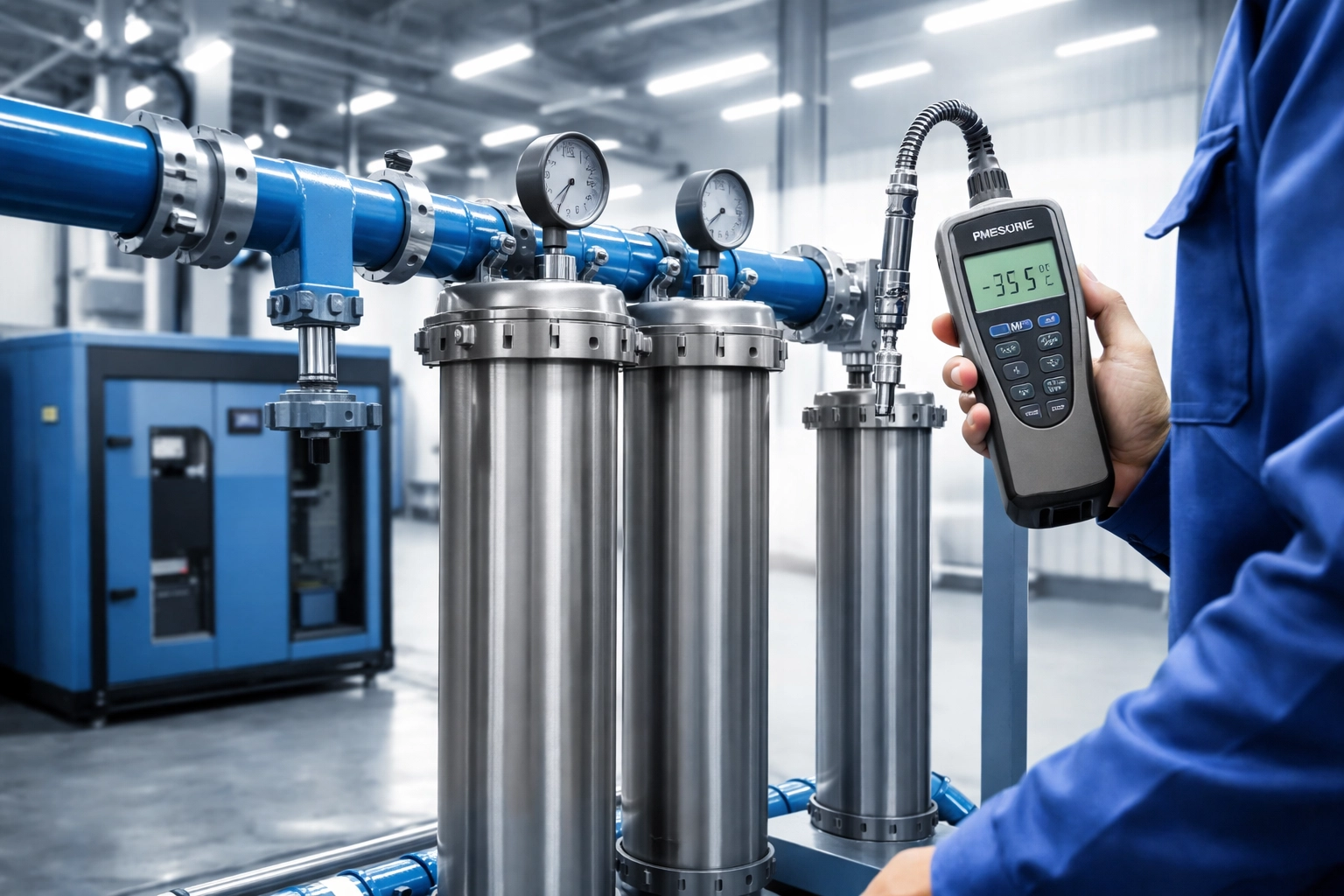
- Pressure dew point using a calibrated hygrometer
- Oil content using appropriate sampling and analysis methods
Test at the point of use, not just at the dryer outlet.
Step 4: Compare results against your target class
If any measurement exceeds your target class limit, identify the gap. Is it a filter element past its service life? A dryer undersized for your flow rate? Contamination entering from old piping?
Step 5: Document everything
Auditors require a paper trail: test certificates, calibration records for instruments, filter replacement logs, and system diagrams. No documentation means no compliance proof.
What do ISO 8573-1 auditors specifically look for during an inspection?
Auditors verify three things: your stated purity class requirement, your equipment capability to achieve it, and your test records proving you actually achieve it.
During a typical audit, expect the following requests:
- Written documentation of your required ISO 8573-1 class with justification
- System schematic showing all air treatment equipment with specifications
- Maintenance records showing filter element replacement dates and intervals
- Calibration certificates for any in-house testing instruments
- Third-party test reports from within the past 12 months (or per your quality system requirements)
- Corrective action records if previous tests showed non-conformance
Critical point: auditors verify testing frequency matches application criticality. A pharmaceutical clean room application may require continuous monitoring, while a general manufacturing line might need quarterly testing. Your quality management system should define and justify your testing frequency.
How does your compressed air source affect ISO 8573-1 compliance?
Your compressor type directly impacts how much filtration you need downstream. Oil-injected screw compressors introduce oil into the air stream by design: typically 2-5 mg/m³ at the discharge. Achieving Class 1 oil compliance (0.01 mg/m³) from an oil-injected machine requires multiple filtration stages: coalescing filters plus activated carbon adsorption.
Oil-free screw compressors eliminate oil contamination at the source, significantly simplifying downstream treatment. For applications requiring Class 1 or Class 2 oil purity, oil-free technology often proves more cost-effective over the equipment lifecycle than extensive filtration systems.
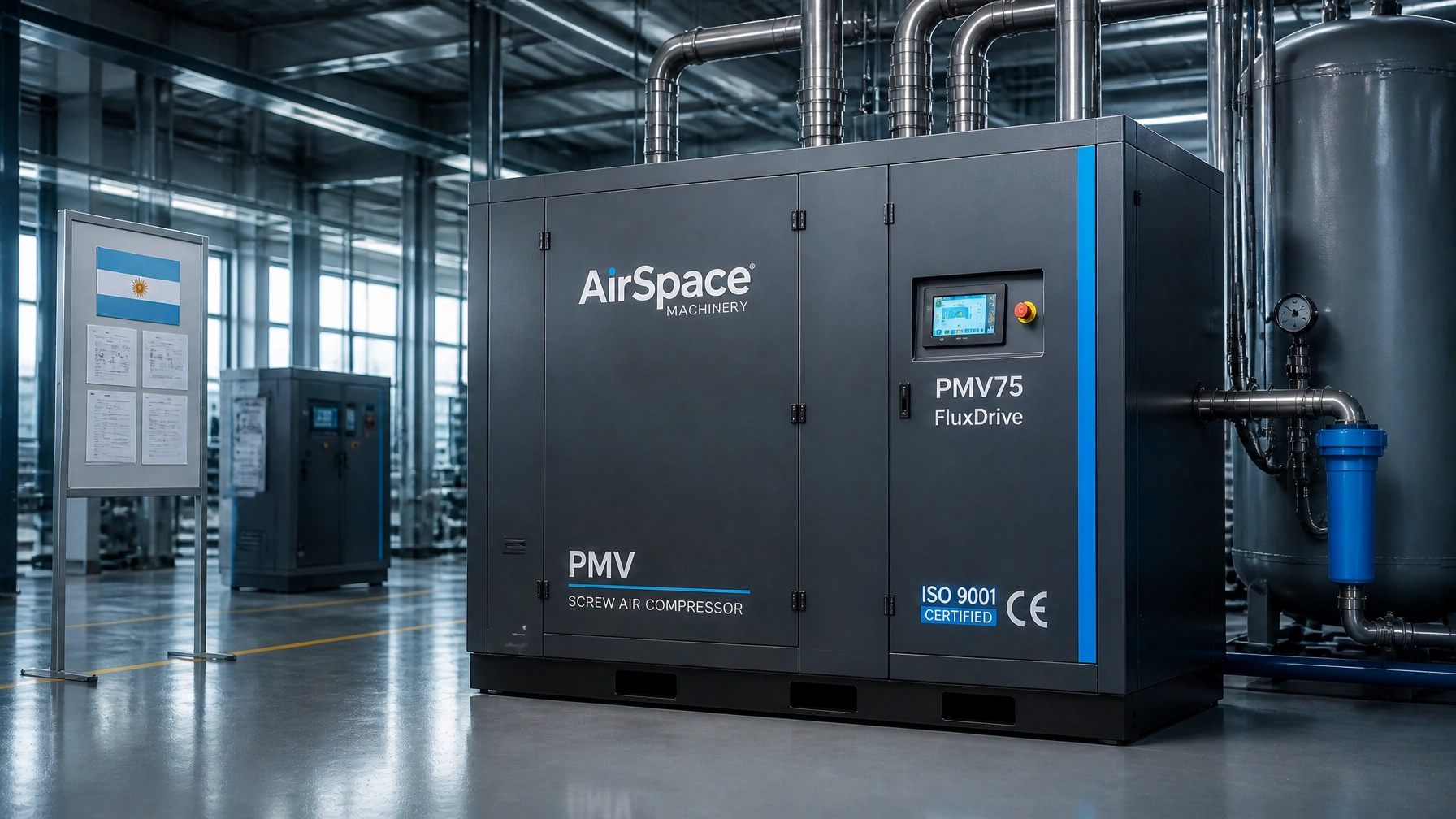
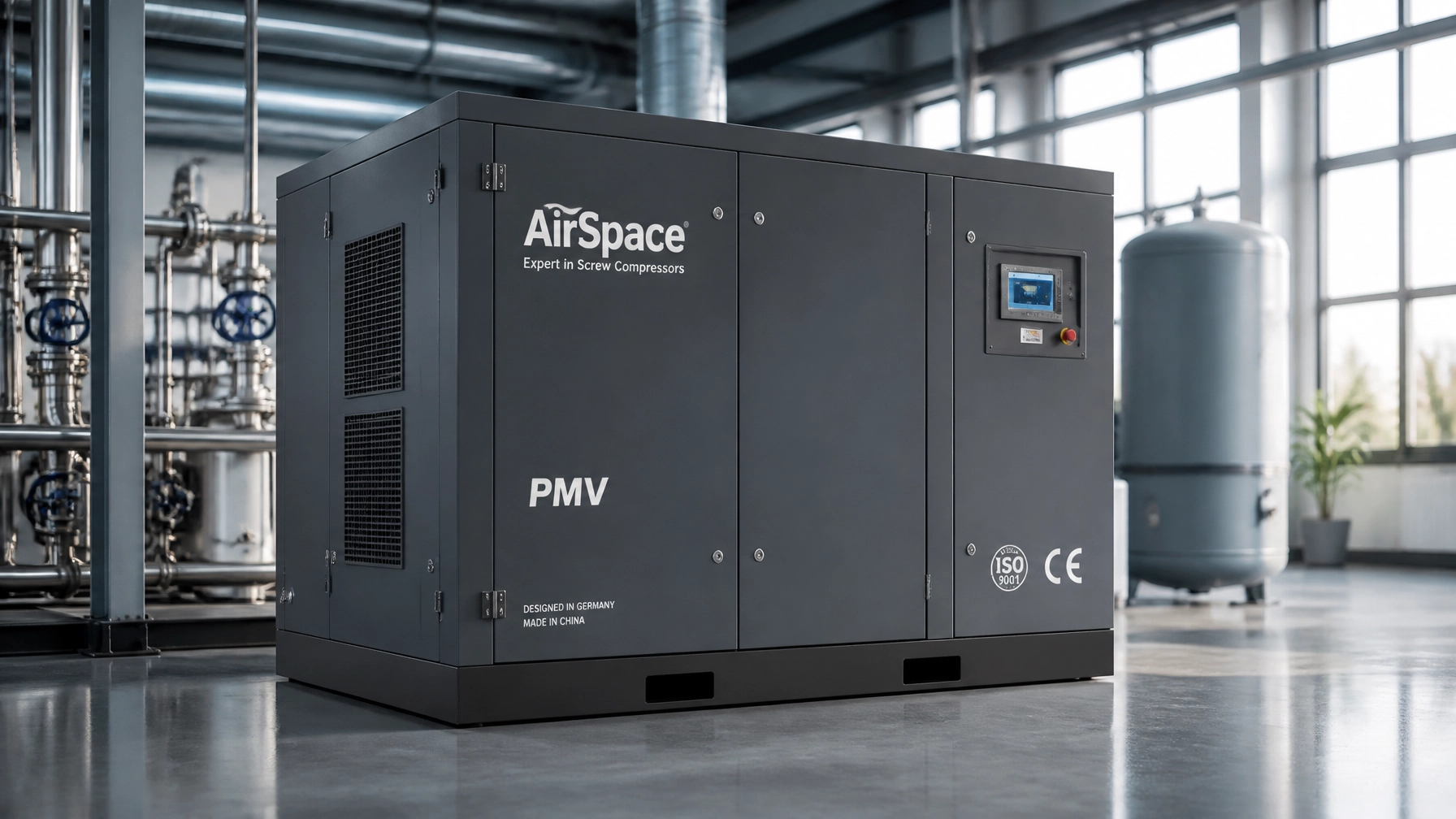
At AirSpace Machinery, our Permanent Magnet Variable Frequency (PMV) Screw Air Compressors are designed for energy-efficient operation while meeting CE and ISO 9001 quality standards. For facilities pursuing strict ISO 8573-1 compliance, we provide complete system solutions including properly matched dryers and filtration: not just standalone compressors.
What should you do right now to prepare for your next audit?
Take these three immediate actions:
- Request your filter supplier’s ISO 8573-1 performance data showing which purity class each filter element achieves under rated conditions
- Schedule a point-of-use air quality test within the next 30 days if you do not have a current test report
- Review your maintenance logs to verify filter elements are replaced per manufacturer recommendations
If you discover compliance gaps, address them before the audit: not during. Auditors appreciate proactive corrective action far more than reactive excuses.
For facilities upgrading compressed air systems or building new installations, designing for ISO 8573-1 compliance from the start is significantly more cost-effective than retrofitting filtration later. Our engineering team at AirSpace Machinery provides system design consultations for global buyers seeking energy-efficient air compressor solutions that meet international air quality standards.
Ready to verify your system or design a compliant installation?
Specify your required pressure (bar/psi), flow rate (m³/min or CFM), and target ISO 8573-1 class. Lead times depend on system configuration.
Sources and Standards Referenced
- ISO 8573-1:2010 – Compressed air quality classification for particles, water, and oil
- ISO 8573-2 through ISO 8573-9 – Testing methods for compressed air contaminants
- Filter performance grades per ISO 12500 series
📅 Last updated:
⚡ Is Your Factory Bleeding Cash?
Most fixed-speed compressors waste $3,600/year in "Unload Tax." Test your waste level in 30 seconds.
RUN THE ROI TEST →Ready to See How Much Your Facility Can Save?
Fill out the form below for a Free Energy Assessment.