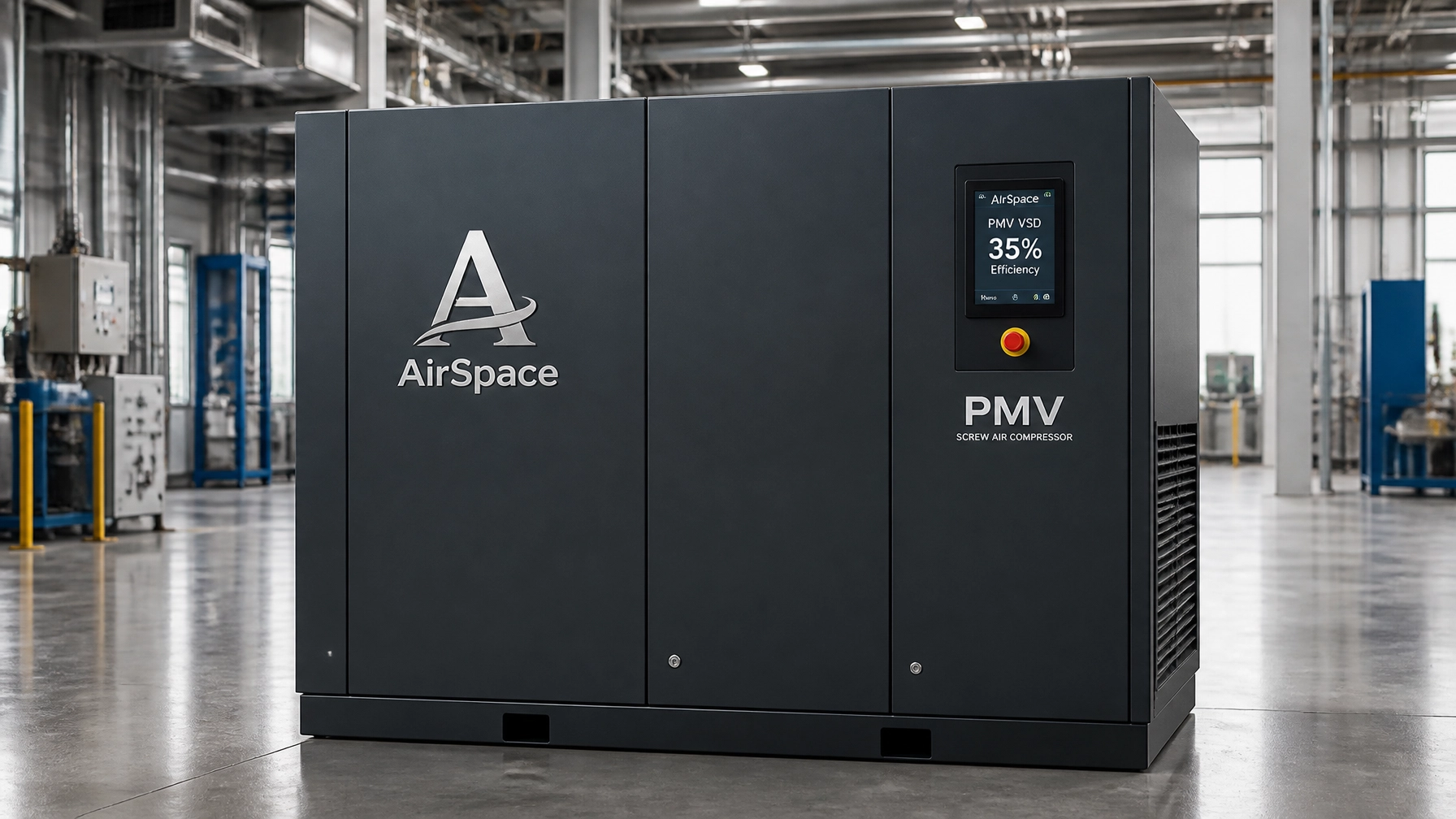
Inconsistent compressed air pressure costs your facility money every single day. Production lines slow down. Tools underperform. Energy bills climb. At AirSpace Machinery, with over 300,000 square meters of manufacturing capacity and decades of experience building energy-efficient air compressor systems, we see these problems regularly across industries worldwide.
The good news? Most pressure instability issues trace back to a handful of common causes. Understanding them means faster fixes and a more reliable compressed air system. This guide walks through the ten most frequent reasons your pressure fluctuates and exactly what to do about each one.
REASON 1: AIR LEAKS THROUGHOUT YOUR SYSTEM
Air leaks remain the single most common cause of pressure drops in compressed air systems. They hide at joints, couplings, valves, quick-connect fittings, and aging hoses. A system with multiple small leaks forces your compressor to work harder, cycle more frequently, and still fail to maintain stable pressure.
How to Fix It: Conduct a systematic leak audit. Install pressure monitors at different points within your piping network to pinpoint overlooked gaps. Check all joints and connections for tightness. Replace worn seals and damaged connectors. Many facilities discover that addressing leaks alone improves pressure stability by 20 percent or more.
REASON 2: CLOGGED OR CONTAMINATED AIR FILTERS
Dirty intake filters obstruct airflow before air even enters the compressor. When ambient air cannot flow freely into the system, the compressor struggles to build and maintain adequate pressure. This problem accelerates in dusty manufacturing environments or facilities with high particulate loads.
How to Fix It: Establish a regular filter inspection and replacement schedule. In heavy-use environments, check filters weekly rather than monthly. Clean or replace filters as soon as restriction becomes evident. Fresh filters allow your compressor to breathe properly and deliver consistent output pressure.
REASON 3: UNDERSIZED COMPRESSOR CAPACITY
When compressor output cannot match actual system demand, pressure drops become inevitable. This mismatch happens when facilities add equipment over time without upgrading their compressed air source, or when initial system sizing calculations underestimated peak demand periods.
How to Fix It: Measure your actual air demand versus current compressor capacity. Calculate consumption during peak production hours. If demand regularly exceeds supply, consider upgrading to a properly sized energy-efficient air compressor or adding supplemental capacity. Variable frequency drive (VFD) screw compressors adjust output to match fluctuating demand, preventing both pressure drops and energy waste.
REASON 4: DEMAND FLUCTUATIONS OVERWHELMING THE SYSTEM
Production schedules rarely create steady, predictable air demand. Shift changes, machine startups, and batch processes create sudden spikes that fixed-speed compressors cannot accommodate quickly enough. The result is pressure that surges and drops throughout the workday.
How to Fix It: Map your demand profile across a full production cycle. Identify peak usage periods and the equipment causing them. Consider installing receiver tanks to buffer sudden demand spikes. Permanent Magnet Variable Frequency (PMV) screw compressors excel in these situations because they ramp output up or down within seconds, maintaining stable pressure regardless of demand changes.
REASON 5: EXCESSIVE DIRECTIONAL CHANGES IN PIPING
Every elbow, tee, and directional change in your piping creates turbulence and friction losses. A system with multiple tight turns accumulates significant pressure drop between the compressor and end-use equipment. Several meters of straight pipe creates far less pressure loss than a series of fittings squeezed into a short run.
How to Fix It: Audit your piping layout. Redesign sections with excessive directional changes where practical. Replace 90-degree elbows with longer-radius bends. Straighten pipe runs wherever possible. These changes reduce friction losses and deliver more of your compressor’s output pressure to the tools and machines that need it.
REASON 6: UNDERSIZED PIPING OR HOSES
Piping diameter directly affects pressure delivery. Undersized pipes or excessively long flexible hose runs restrict airflow, creating pressure drops that worsen as demand increases. This problem often appears gradually as facilities expand without upgrading their distribution infrastructure.
How to Fix It: Calculate the appropriate pipe diameter for your flow rates and distances. As a general rule, larger diameter piping costs more upfront but delivers significant pressure and energy savings over time. Keep flexible hose runs as short as practical and sized appropriately for the tools they serve.
REASON 7: RESTRICTIVE QUICK COUPLINGS AND FITTINGS
Quick-connect couplings offer convenience but often feature restrictive internal bores that choke airflow. A coupling rated for a smaller flow than your application requires creates a bottleneck that drops pressure at the point of use.
How to Fix It: Measure the pressure drop across your quick couplings under actual operating conditions. Replace restrictive fittings with designs that allow adequate flow for your applications. High-flow couplings cost marginally more but eliminate unnecessary pressure losses.
REASON 8: FAULTY PRESSURE REGULATOR
Pressure regulators control delivery pressure to specific zones or equipment. A failing regulator cannot maintain consistent output pressure, causing tools and machines to receive erratic supply. Symptoms include pressure that drifts upward or downward over time or fails to respond to adjustment.
How to Fix It: Test regulators by observing downstream pressure under varying demand. Replace any regulator that cannot hold a steady setting or that responds sluggishly to changes. Ensure replacement regulators are properly sized and adjusted according to manufacturer specifications.
REASON 9: MOISTURE AND CONTAMINATION IN THE AIR STREAM
Water vapor, oil carryover, and other contaminants create resistance within your compressed air system. Moisture accumulates in low points, restricts flow through filters and regulators, and damages downstream equipment. Oil contamination coats internal surfaces and degrades seals.
How to Fix It: Monitor moisture content using pressure dew point measurements. Install appropriate refrigerated or desiccant air dryers sized for your system capacity and ambient conditions. Drain receiver tanks regularly. Maintain proper oil levels and quality in lubricated screw compressors. Clean air flows more efficiently and protects your entire system.
REASON 10: WORN OR COMPROMISED INTERNAL COMPONENTS
Inside your compressor, intake valves, pressure valves, gaskets, and seals work together to build and maintain pressure. As these components wear, the compressor loses efficiency and struggles to reach or hold target pressure. Age, contamination, and thermal stress accelerate this deterioration.
How to Fix It: Follow manufacturer maintenance schedules for inspection and replacement of wear components. Address problems promptly when performance begins declining rather than waiting for complete failure. Regular maintenance extends compressor life and ensures stable, reliable pressure output.
TAKING A SYSTEMATIC APPROACH
Pressure instability rarely stems from a single cause. Most facilities dealing with fluctuating pressure find multiple contributing factors once they conduct a thorough system audit. Start with the most common issues: leaks, filters, and demand mismatches: then work through piping and component concerns systematically.
Modern energy-efficient air compressor technology, particularly Permanent Magnet Variable Frequency screw compressors, addresses many of these challenges through intelligent control systems that adapt to real-time conditions. Combined with proper piping design, regular maintenance, and appropriate air treatment, these systems deliver the stable pressure your production demands.
AirSpace Machinery engineers work with facilities worldwide to diagnose pressure stability issues and recommend solutions tailored to specific applications. Whether you need a capacity upgrade, system redesign, or simply expert guidance on maintenance best practices, our team brings the technical expertise to solve your compressed air challenges.
Ready to stabilize your compressed air system? Get a Proposal from our engineering team. Specify your required pressure (bar/psi) and flow (m³/min or CFM), and we will recommend the right solution for your facility. Lead times depend on configuration.
Contact us at: https://www.chinacompressor.org/contact-us
Explore our energy-efficient air compressor range: https://www.chinacompressor.org/shop
Reviewed by Engineering
Sources and Standards
Air quality classifications referenced according to ISO 8573-1 international standard. Pressure drop calculations and piping guidelines align with Compressed Air and Gas Institute (CAGI) recommendations. All AirSpace Machinery compressors meet CE and ISO 9001 certification requirements.