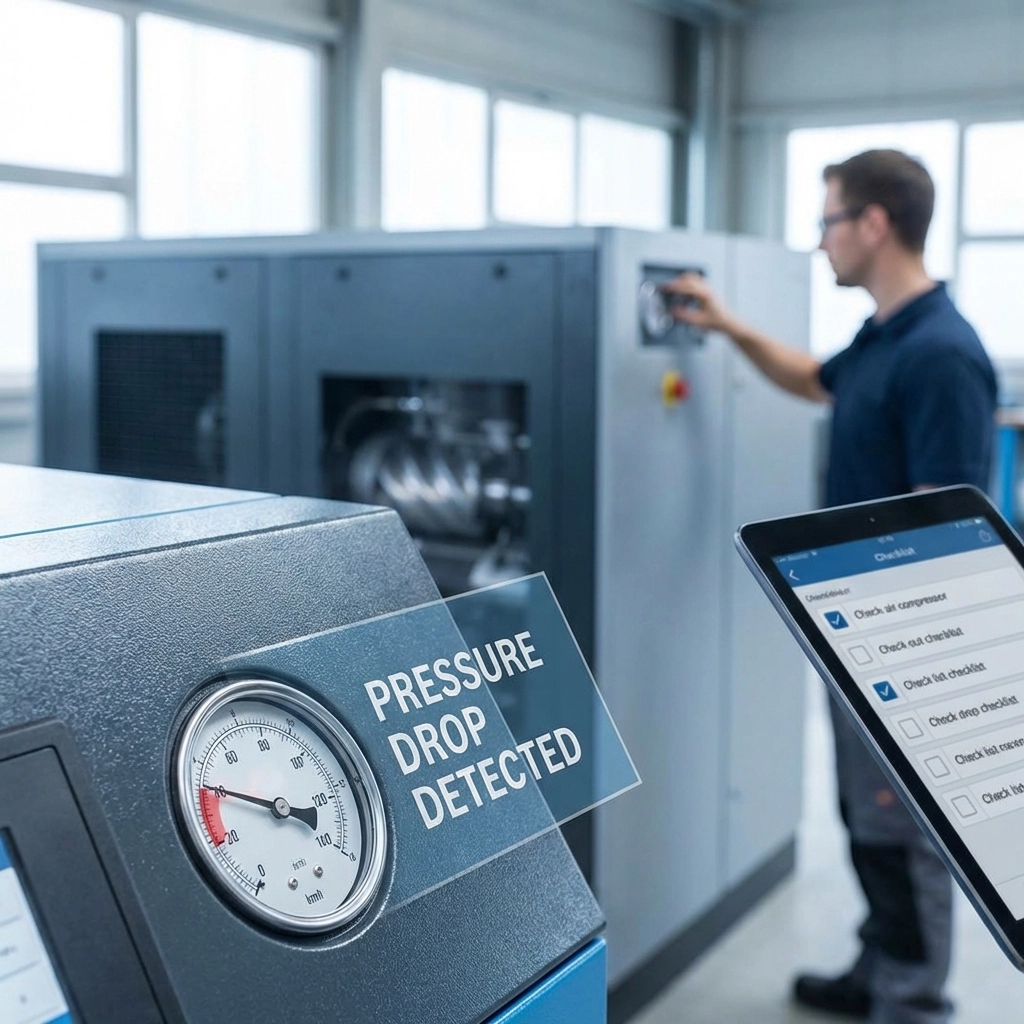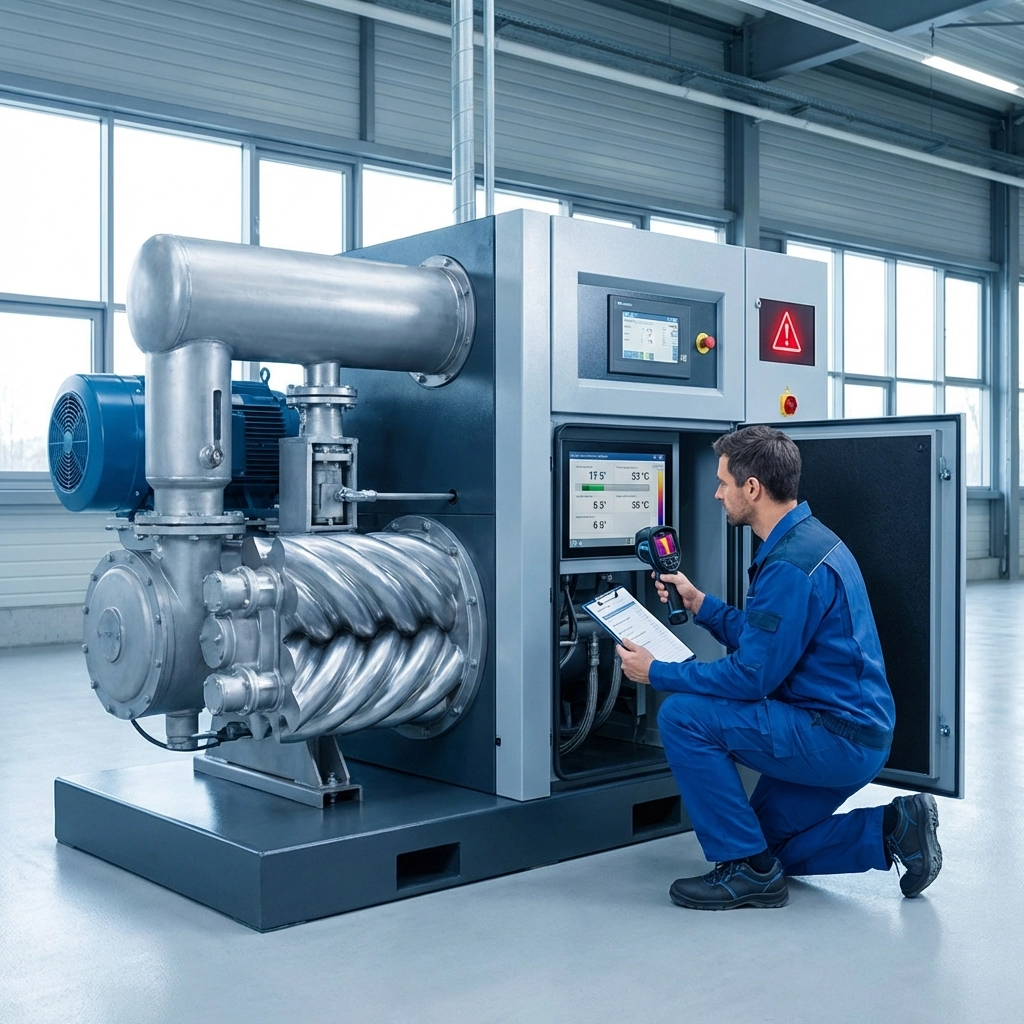
Industrial air compression systems are the backbone of modern manufacturing, yet many facilities unknowingly sabotage their efficiency through common mistakes. After 20 years of engineering experience and countless system assessments, we've identified seven critical errors that cost businesses thousands in energy waste, downtime, and premature equipment failure.
These mistakes aren't just minor inefficiencies: they're productivity killers that can increase your operating costs by 30-50% annually. The good news? Every single one is completely preventable with the right knowledge and approach.
Mistake #1: Incorrect System Sizing
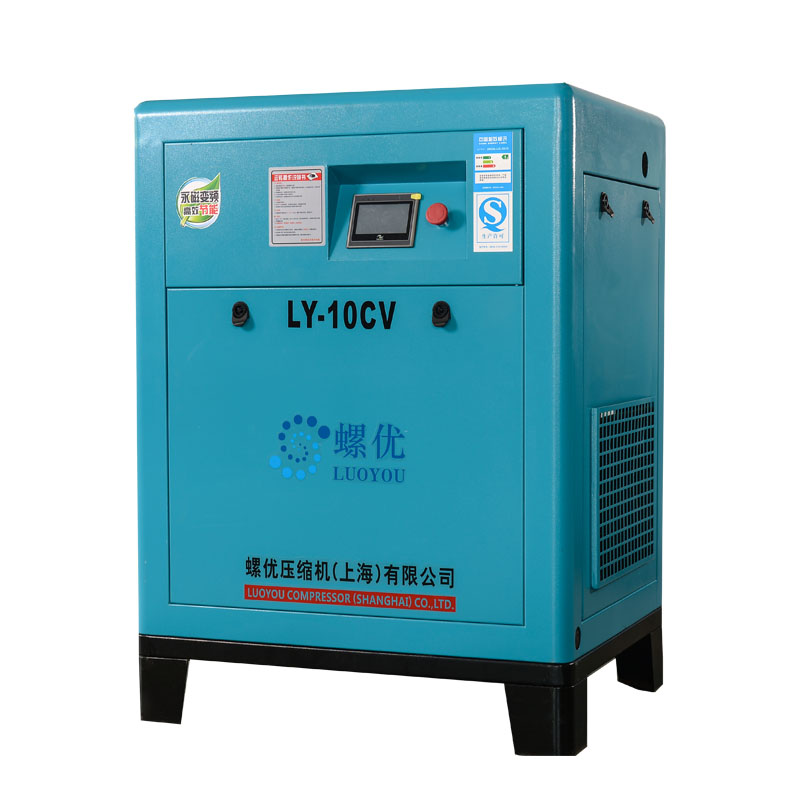
The most fundamental error in industrial air compression is sizing your screw air compressor incorrectly. Whether oversized or undersized, wrong sizing creates a cascade of operational problems that plague your facility for years.
Oversized systems waste enormous amounts of energy during startup cycles, while undersized units run continuously at maximum capacity, leading to premature wear and inconsistent air supply. According to ISO 1217 testing standards, a properly sized energy-efficient air compressor should operate at 70-85% of its maximum capacity during normal operations.
How to fix it:
- Calculate your actual CFM requirements by auditing all pneumatic equipment
- Account for peak demand periods when multiple tools operate simultaneously
- Factor in 15-20% headroom for future expansion
- Choose Permanent Magnet Variable Frequency (PMV) screw air compressors that automatically adjust output to match demand
Mistake #2: Ignoring Air Leaks
Air leaks are silent profit killers that many facilities simply accept as "normal." A single 1/4-inch leak in a 100 PSI system wastes approximately 100 CFM of compressed air: equivalent to running a 25 HP compressor continuously just to compensate.
The problem compounds when operators increase system pressure to maintain adequate flow, which actually makes leaks worse and increases energy consumption exponentially.
How to fix it:
- Implement monthly leak detection audits using ultrasonic leak detectors
- Tag and prioritize repairs based on leak size and location
- Replace worn quick-disconnect fittings and damaged hose connections immediately
- Install pressure regulators at point-of-use to minimize system-wide pressure requirements
Mistake #3: Poor Intake Air Quality
Contaminated intake air destroys compressor internals and degrades compressed air quality throughout your system. Dusty environments, high humidity, and inadequate filtration create expensive maintenance cycles and product quality issues.
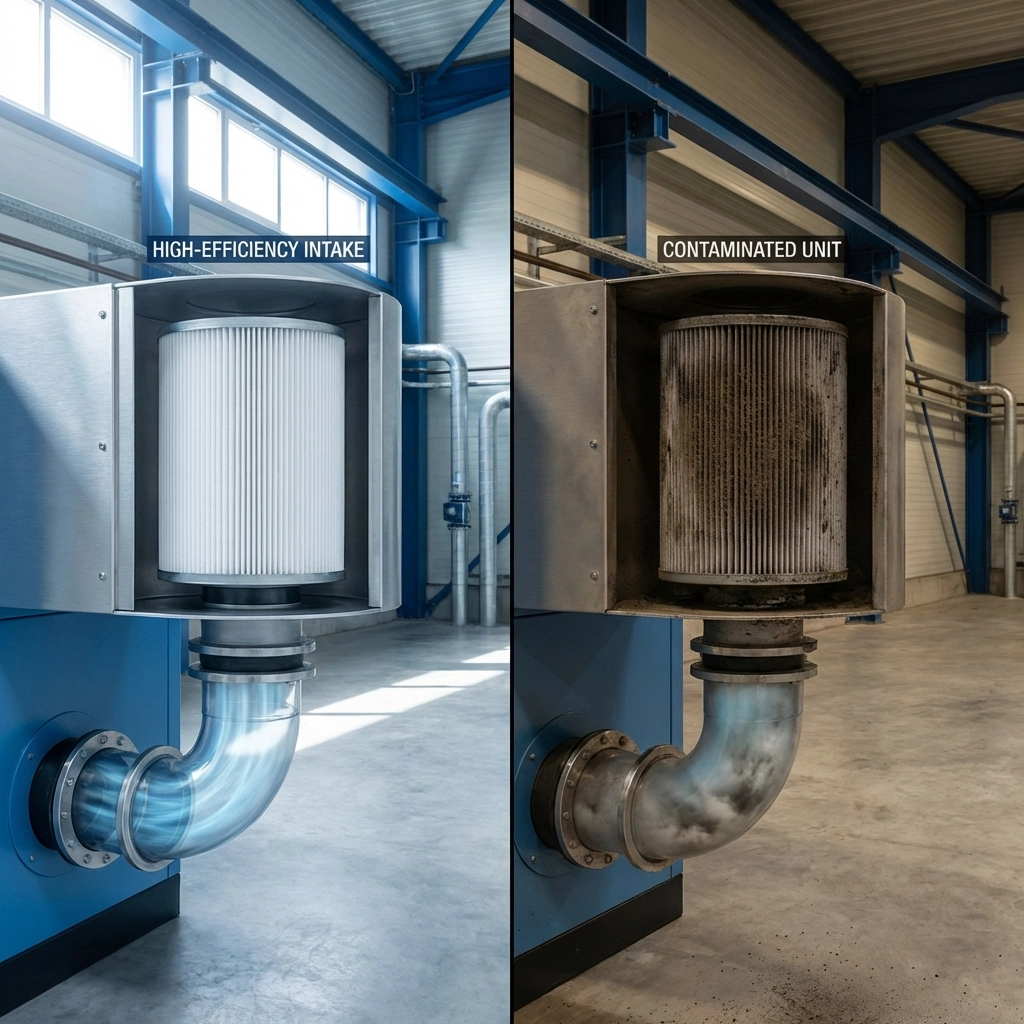
Most facilities underestimate how intake air conditions affect their energy-efficient air compressor performance. Poor air quality forces the system to work harder, increases filter replacement frequency, and can void warranty coverage.
How to fix it:
- Install high-efficiency intake filters rated for your environment
- Position compressor intakes away from dust sources and exhaust vents
- Monitor and replace filters according to pressure differential readings, not just time intervals
- Consider relocating compressors to cleaner areas when possible
Mistake #4: Running at Excessive Pressure
Operating at higher pressure than necessary is one of the most expensive mistakes in compressed air systems. For every 2 PSI increase in operating pressure, energy consumption rises by approximately 1%. Yet many facilities run at 120-150 PSI when their applications only require 90-100 PSI.
This happens because operators compensate for pressure drops, leaks, and undersized distribution systems by cranking up the pressure instead of addressing root causes.
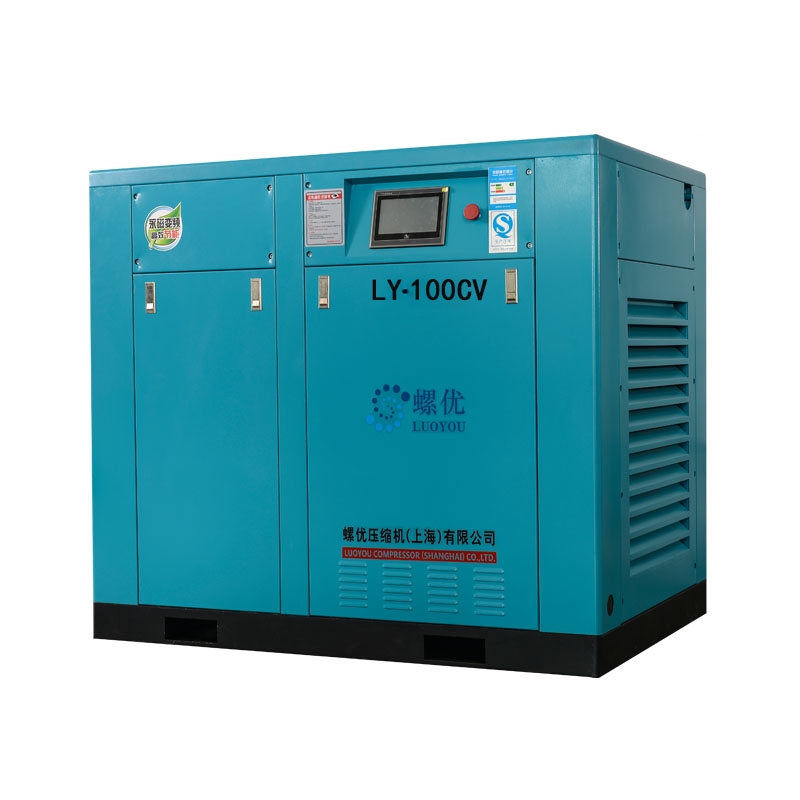
How to fix it:
- Audit actual pressure requirements for each application
- Install pressure regulators at each point of use
- Size distribution piping properly to minimize pressure drops
- Use variable frequency drives on your screw air compressors to maintain optimal pressure automatically
Mistake #5: Inadequate Air Treatment
Skipping proper air drying and filtration seems like a cost-saving measure until you factor in the damage caused by moisture and contaminants. Water in compressed air systems causes rust, freezing in outdoor lines, and product contamination in manufacturing processes.
According to ISO 8573-1 air quality standards, most industrial applications require Class 4 or better air quality, which is impossible to achieve without proper treatment equipment.
How to fix it:
- Install refrigerated air dryers for most applications
- Use desiccant dryers for critical applications requiring very low dew points
- Implement multi-stage filtration: particulate, coalescing, and activated carbon filters
- Size treatment equipment based on actual flow rates, not compressor nameplate capacity
Mistake #6: Poor Condensate Management
Compressed air systems generate significant amounts of condensate that must be properly managed. Improper drainage leads to system contamination, environmental compliance issues, and equipment damage.
Many facilities rely on manual draining, which is inconsistent and often forgotten. Others use timer drains that waste compressed air by opening unnecessarily.
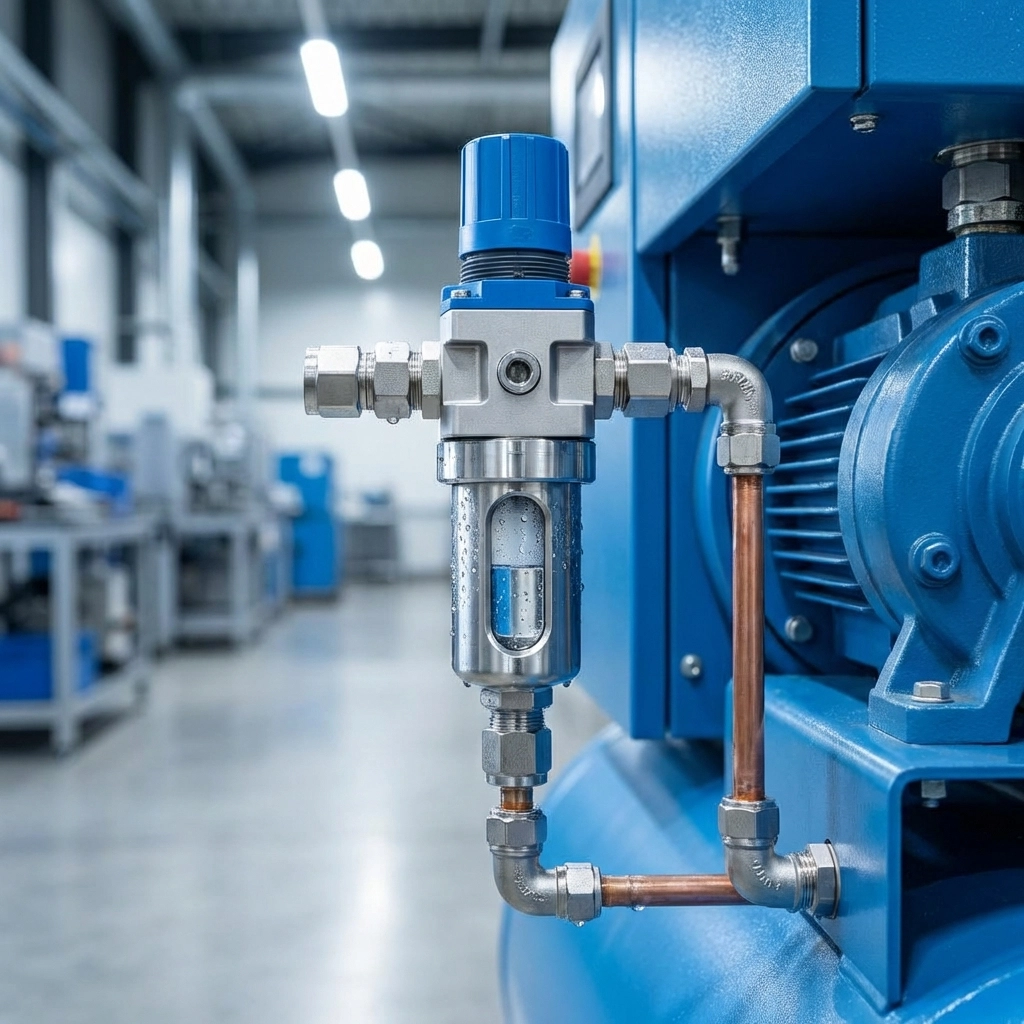
How to fix it:
- Install zero-loss automatic condensate drains throughout the system
- Implement proper condensate treatment for oil-water separation
- Schedule regular maintenance for all drain points
- Monitor drain operation to ensure proper function
Mistake #7: No System Monitoring
Operating blind without performance monitoring means inefficiencies go undetected for months or years. Modern energy-efficient air compressor systems should provide detailed data on energy consumption, pressure trends, and maintenance requirements.
Without monitoring, you can't identify problems before they become expensive failures, optimize system performance, or make informed decisions about upgrades or modifications.
How to fix it:
- Install comprehensive monitoring systems that track pressure, flow, power consumption, and run hours
- Set up automated alerts for abnormal operating conditions
- Review performance data monthly to identify trends and optimization opportunities
- Use data to schedule predictive maintenance and avoid unexpected downtime
Quick Fix Checklist
Monthly Tasks:
- Check for air leaks using soap solution or ultrasonic detector
- Inspect and clean intake filters
- Verify condensate drains are operating properly
- Review system pressure requirements
Quarterly Tasks:
- Analyze energy consumption trends
- Inspect and replace air treatment filters
- Calibrate pressure monitoring equipment
- Review maintenance schedules and update as needed
Annual Tasks:
- Conduct comprehensive system audit
- Evaluate sizing for current and projected needs
- Update air quality testing per ISO 8573-1 standards
- Consider energy-efficient air compressor upgrades
The Bottom Line
These seven mistakes cost industrial facilities millions in unnecessary energy expenses, maintenance costs, and lost productivity every year. The solution isn't complicated: it requires systematic attention to proper sizing, maintenance, and monitoring.
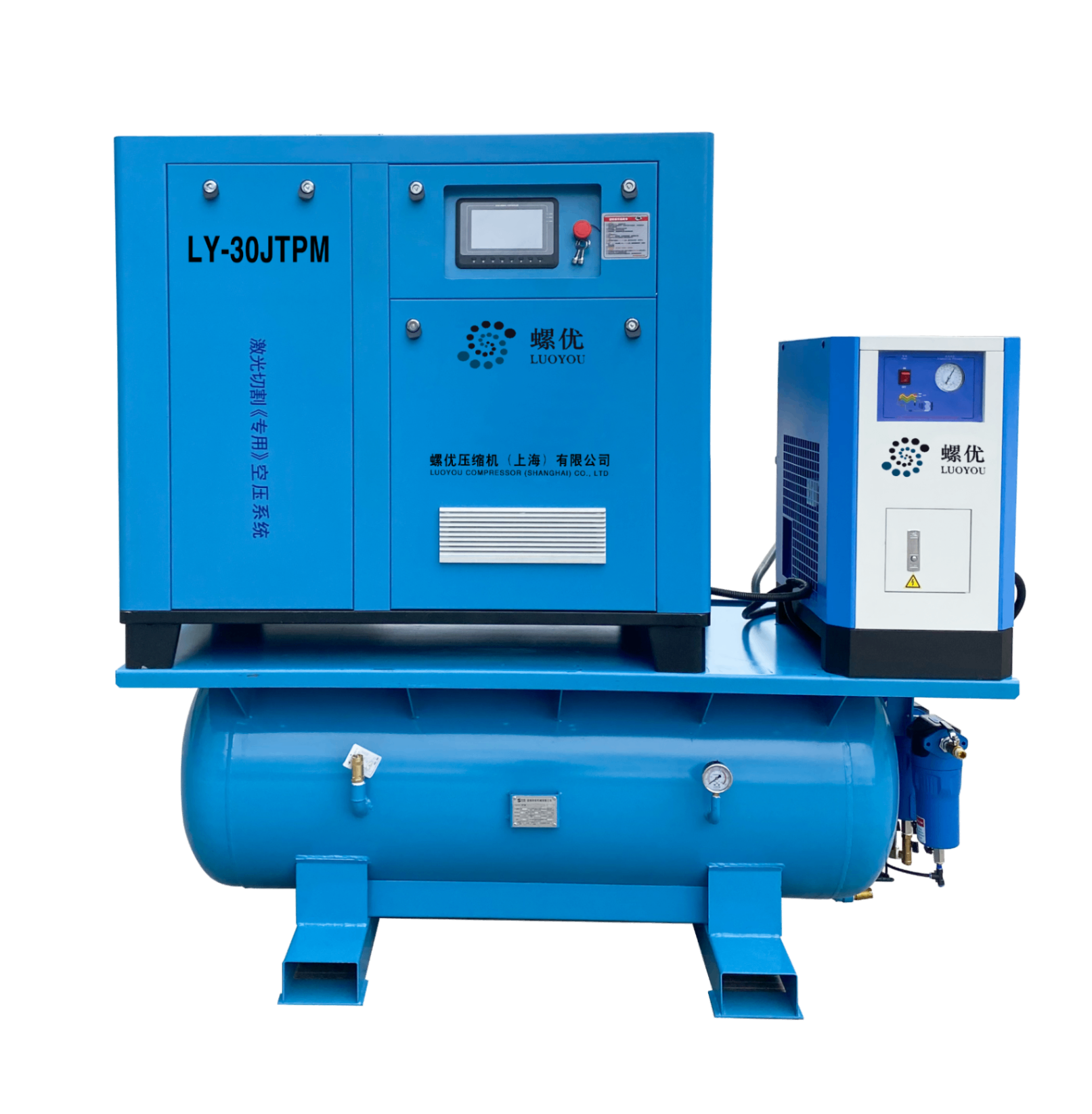
At AirSpace Machinery Co., Ltd., our CE and ISO 9001 certified Permanent Magnet Variable Frequency (PMV) screw air compressors are engineered to eliminate these common problems through intelligent design and advanced control systems. Our systems automatically adjust output to match demand, maintain optimal pressure, and provide comprehensive monitoring capabilities.
Don't let these preventable mistakes drain your profitability. Our engineering team can conduct a comprehensive assessment of your current system and provide recommendations for immediate improvements and long-term optimization.
Ready to eliminate these costly mistakes from your facility? Our experienced engineers will conduct a free compressed air audit and provide detailed recommendations for improving efficiency, reducing costs, and maximizing reliability.
Get a Proposal today and discover how proper system design and quality equipment can transform your compressed air performance.
Reviewed by Engineering Team
This article was reviewed by our certified engineering team to ensure technical accuracy and compliance with current industry standards.
About the Author
Penny Winston | AirSpace Machinery
Industrial Air Systems Specialist
Penny Winston brings over a decade of experience in industrial compressed air system design and optimization. She specializes in helping manufacturers identify inefficiencies and implement energy-efficient solutions that reduce operating costs while improving reliability.
Sources and Standards:
- ISO 8573-1: Compressed air quality classifications
- ISO 1217: Displacement compressor performance testing standards
- Industry energy efficiency data from compressed air system audits