How to Size an Air Compressor (Without Overbuying): A Practical Step-by-Step Guide
Buying an air compressor that's too big wastes money. Buying one that's too small causes workflow headaches and premature wear. Getting it right the first time? That saves you thousands over the equipment's lifetime.
This guide walks you through a practical, step-by-step sizing process. No complicated formulas. No guesswork. Just a clear method that plant managers and procurement teams can use today.
Why Correct Sizing Matters More Than You Think
An oversized compressor doesn't just cost more upfront. It runs inefficiently, cycles too frequently, and drives up your energy bills month after month. An undersized unit? It struggles to keep up, runs hot, and breaks down faster.
The sweet spot is an energy-efficient air compressor matched to your actual demand : with a sensible buffer for growth.
Here's the good news: sizing isn't complicated once you know what to measure.
Step 1: List Every Air-Powered Tool and Machine
Start by walking the floor. Write down every piece of equipment that uses compressed air:
- Pneumatic tools (grinders, drills, impact wrenches)
- Blow guns and cleaning stations
- Packaging machines
- Paint sprayers
- Conveyor systems
- CNC machines with air-actuated components
For each item, find the CFM (Cubic Feet per Minute) requirement. This is usually in the manual or stamped on the tool. If you can't find it, contact the manufacturer directly.
Pro tip: Don't skip ancillary equipment. Air dryers, filters, and long piping runs all consume or reduce effective airflow. Factor them in now.
Step 2: Calculate Your Total CFM for Simultaneous Use
Here's where most people make mistakes. You don't need to add up every tool's CFM : only the ones running at the same time.
Example:
| Equipment | CFM Required |
|---|---|
| CNC machine | 15 CFM |
| Blow station | 8 CFM |
| Packaging line | 12 CFM |
| Total (simultaneous) | 35 CFM |
If your operation has shifts where different equipment runs, calculate the highest-demand scenario. That's your baseline.
Step 3: Add a Safety Margin (But Keep It Reasonable)
This is where overbuying happens. Some suppliers recommend 50% buffers. That's too much for most plants.
A 10–25% margin is plenty for typical industrial applications. This accounts for:
- Minor future expansion
- Pressure drops in the system
- Momentary demand spikes
Calculation:
35 CFM × 1.25 = 43.75 CFM
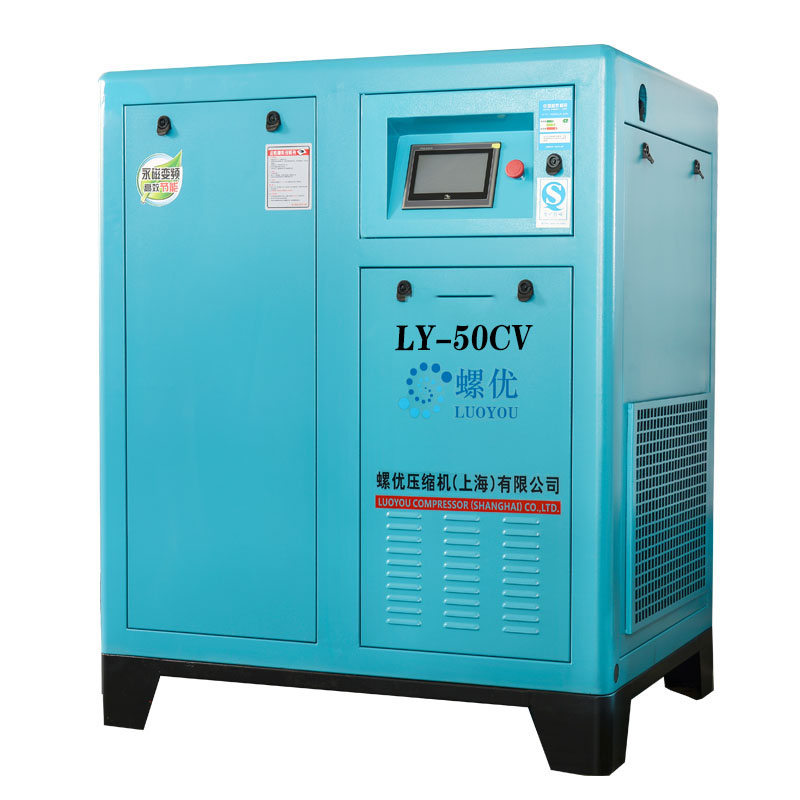
Round up to the nearest available compressor size. In this case, a 45–50 CFM rated screw compressor works perfectly.
Going bigger "just in case" sounds safe : but you'll pay for that extra capacity in wasted energy every single month.
Step 4: Determine Your Maximum PSI Requirement
CFM tells you volume. PSI (Pounds per Square Inch) tells you pressure.
Check the highest PSI requirement among your tools. Most industrial applications fall between 90–125 PSI. Specialty processes like sandblasting may need up to 175 PSI.
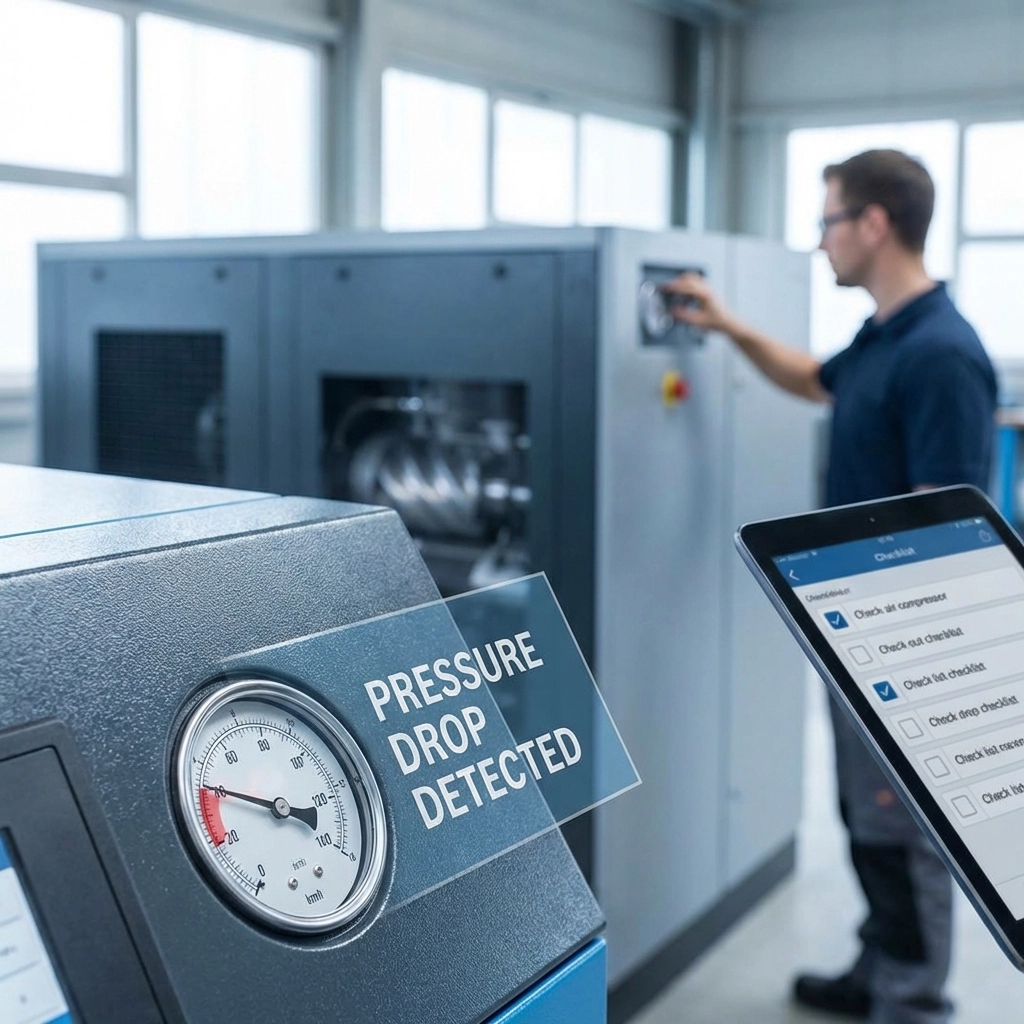
Important: Your compressor must deliver this pressure at the point of use, not just at the tank. Long piping runs, filters, and dryers all create pressure drops.
If your tools need 100 PSI at the endpoint, your compressor may need to produce 110–120 PSI to compensate for system losses.
Our PMV screw compressors are available in 7 bar, 8 bar, 10 bar, and 13 bar configurations : covering most industrial pressure requirements while maintaining energy efficiency across variable loads.
Step 5: Size Your Air Receiver Tank
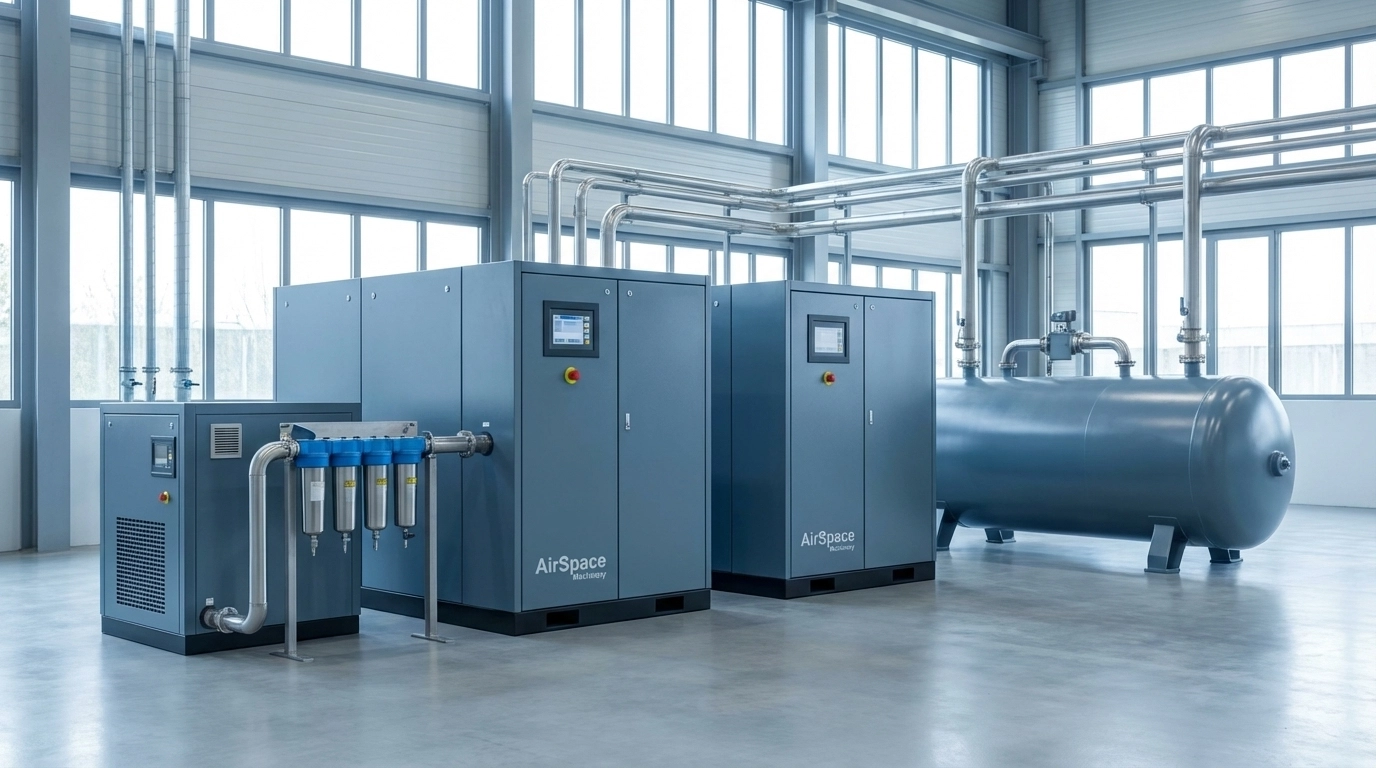
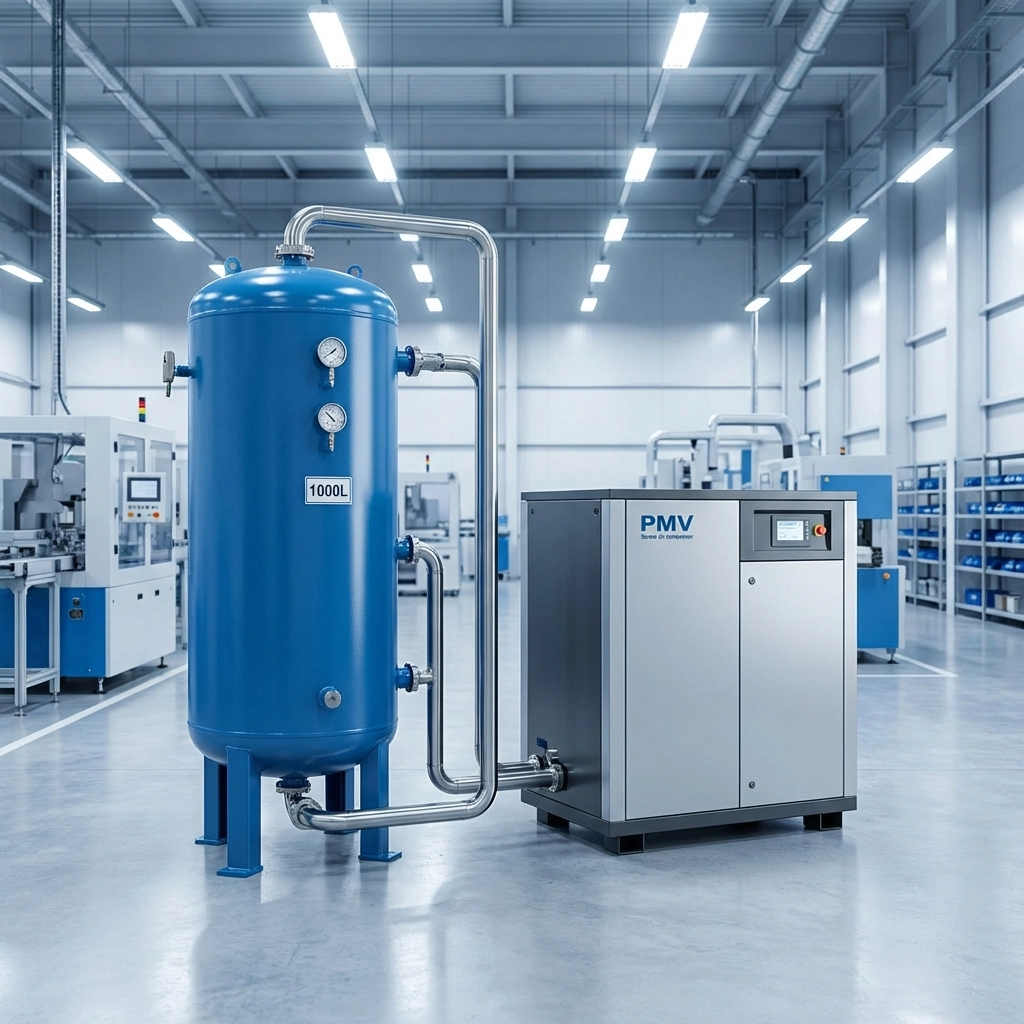
The tank (air receiver) acts as a buffer. It smooths out demand spikes and lets your compressor motor cycle on and off instead of running continuously.
Quick formula:
Total CFM × 5 = Recommended tank size (gallons)
Example:
43.75 CFM × 5 = 218.75 gallons (approximately 800–1000 litres)
A properly sized tank:
- Reduces motor cycling
- Extends compressor lifespan
- Improves pressure stability at endpoints
For larger systems, we typically recommend 1000L to 2000L tanks paired with PMV screw compressors. This combination maximizes efficiency and keeps pressure stable during peak demand.
Step 6: Account for System Losses
Your compressor's rated output is not the same as what reaches your tools. Every component between the compressor and the endpoint reduces effective pressure and flow.
Common sources of loss:
| Component | Typical Pressure Drop |
|---|---|
| Refrigerated air dryer | 3–5 PSI |
| Inline filters | 2–5 PSI per stage |
| 100m of piping | 2–4 PSI |
| Quick-connect fittings | 1–2 PSI each |
Add these up. If your total system loss is 12 PSI, and your tools need 100 PSI, your compressor must deliver at least 112 PSI consistently.
This is why integrated systems matter. When you spec your compressor, dryer, filters, and piping together, you avoid surprises. Our engineering team sizes complete systems : not just compressors : to ensure rated performance at the point of use.
Fixed-Speed vs. VSD: Which Should You Choose?
Once you know your CFM and PSI requirements, you have one more decision: fixed-speed or variable speed drive (VSD)?
Fixed-speed compressors run at constant RPM. They're simple, reliable, and cost-effective when demand is steady.
VSD (or PMV) compressors adjust motor speed to match real-time demand. They're ideal when:
- Demand fluctuates throughout the day
- You run multiple shifts with different loads
- Energy cost reduction is a priority
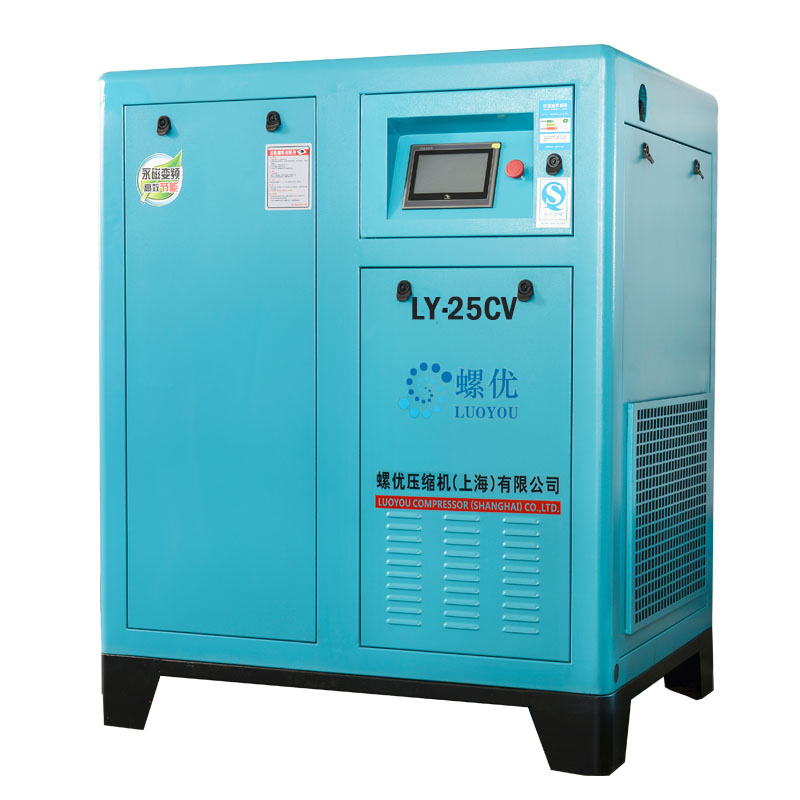
Our Permanent Magnet Variable Frequency (PMV) screw compressors deliver 20–35% energy savings compared to fixed-speed units in variable-load applications. For plants running 16+ hours per day, the payback period is typically under 2 years.
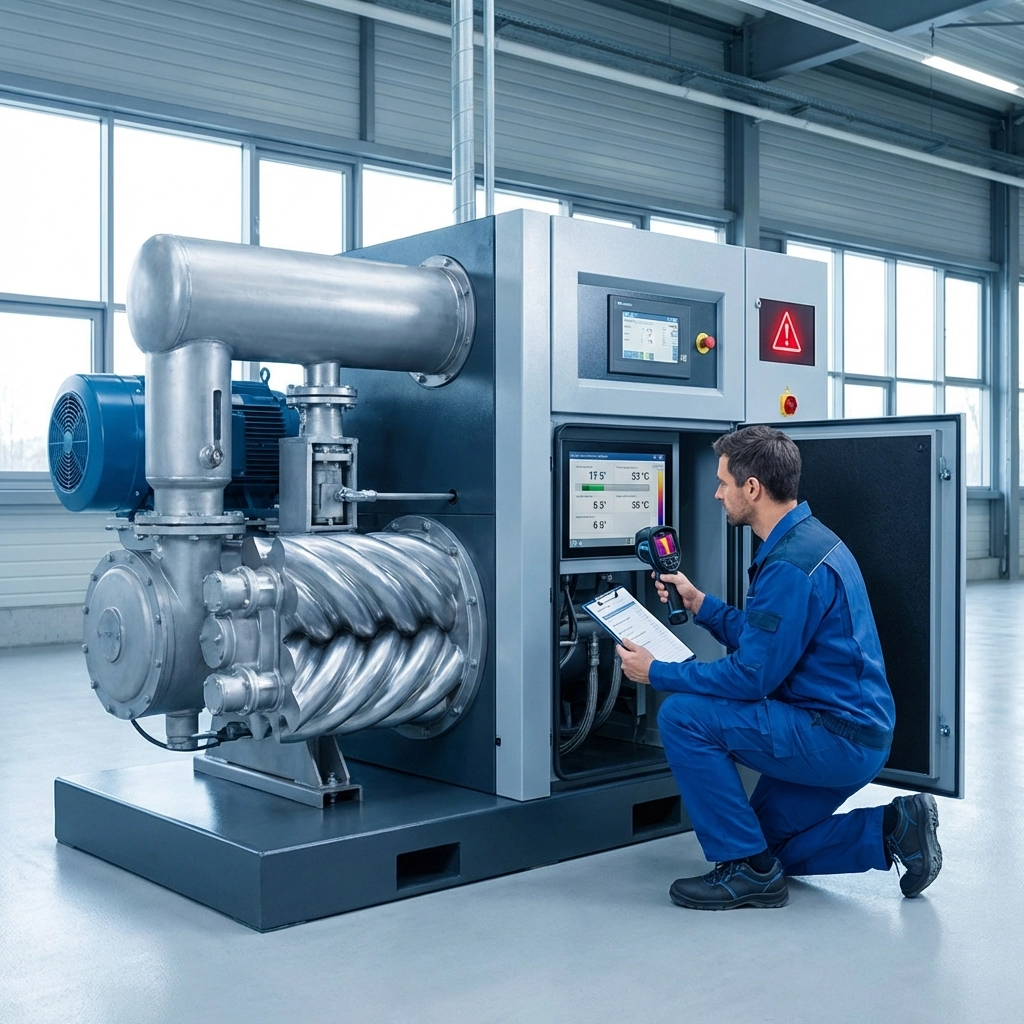
Quick Sizing Checklist
Before you request a quote, confirm these details:
- Total CFM required (simultaneous use)
- CFM with 25% safety margin applied
- Maximum PSI required at point of use
- Estimated system pressure losses
- Preferred tank size (litres or gallons)
- Demand pattern: steady or variable?
- Operating hours per day/week
Having these numbers ready speeds up the quoting process and ensures you get an accurate proposal : not a guess.
What Happens If You Get It Wrong?
Undersized compressor:
- Tools underperform or stall
- Compressor runs constantly, overheats
- Increased maintenance and shorter lifespan
- Production delays
Oversized compressor:
- Higher upfront cost
- Excessive energy consumption
- Frequent cycling (short-cycling damages motors)
- Wasted capital
The goal is an energy-efficient air compressor that runs at 70–80% capacity during peak demand. That leaves headroom without waste.
Let Us Help You Size It Right
Not sure where to start? Our engineering team can review your requirements and recommend the right PMV screw compressor, dryer, filtration, and tank setup for your application.
We'll spec the complete system : compressor, air treatment, piping layout : so you get rated performance at the point of use, not just on paper.
Get a Proposal : just tell us your pressure (bar/psi) and flow (m³/min or CFM) requirements, and we'll take it from there.
Sources & Standards
- CFM and PSI calculation methods based on Compressed Air and Gas Institute (CAGI) guidelines
- Pressure drop estimates per ISO 6358 and manufacturer specifications
- Energy savings figures based on typical PMV vs. fixed-speed comparisons in industrial settings
- Tank sizing formula per industry standard practice (CFM × 5)
Author: Penny Winston | AirSpace Machinery
Reviewed by Engineering