Direct-driven or Belt?
The Direct Answer for 24/7 Operations
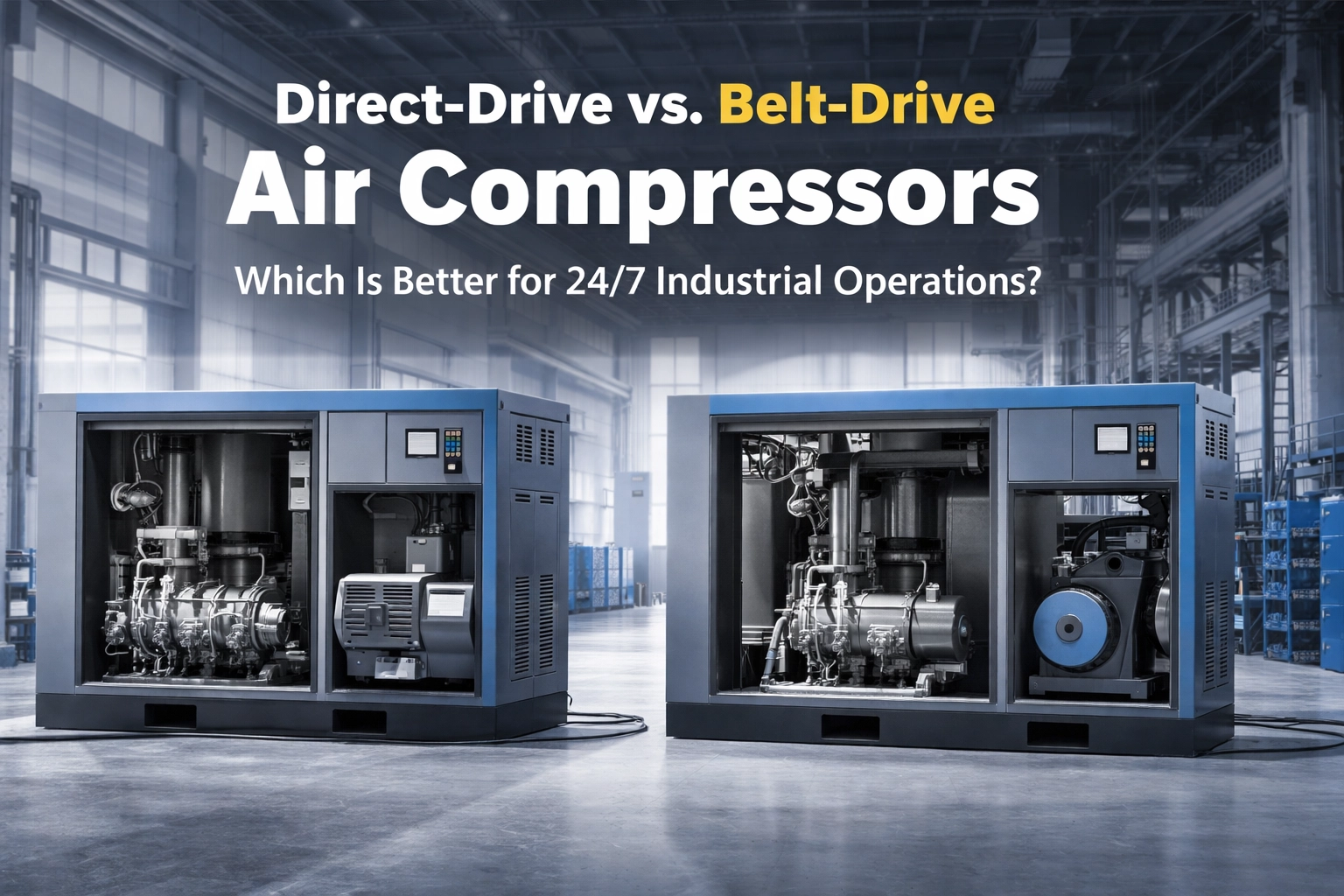
For continuous industrial operations running 24 hours a day, 7 days a week, direct-drive air compressors are the superior choice. Direct-drive systems deliver higher energy efficiency, require significantly less maintenance, and provide greater reliability over extended operating periods compared to belt-drive alternatives. This recommendation applies to most manufacturing environments including automotive, food processing, pharmaceutical, and electronics facilities where uninterrupted compressed air supply is critical to production.
At AirSpace Machinery Co., Ltd., our 20 years of engineering excellence has consistently demonstrated that direct-drive technology outperforms belt-drive systems in demanding industrial applications. Our range of Energy-Efficient Air Compressor solutions from 2HP to 180HP incorporates direct-drive configurations specifically engineered for continuous duty cycles.
Why Direct-Drive Wins on Energy Efficiency
Direct-drive compressors transfer power more efficiently because the motor connects directly to the airend without intermediary components. This direct coupling eliminates the 3 to 5 percent energy loss that occurs through belt slippage and friction in belt-driven systems. For a facility operating compressors continuously, this efficiency difference translates to substantial annual electricity savings.
Consider a 75kW compressor running 8,760 hours annually at full load. A belt-drive system losing 4 percent efficiency to belt friction consumes approximately 26,280 additional kilowatt-hours per year compared to an equivalent direct-drive unit. At industrial electricity rates, this inefficiency costs thousands of dollars annually in wasted energy.
Our Permanent Magnet Variable Frequency (PMV) Screw Air Compressors combine direct-drive technology with variable speed control to maximize energy savings. The PMV motor eliminates belt losses while the variable frequency drive matches compressor output to actual air demand, reducing partial-load energy consumption by up to 35 percent compared to fixed-speed belt-drive units operating under similar conditions.
Maintenance Requirements Comparison
Direct-drive compressors require substantially less maintenance than belt-driven alternatives. Belt-drive systems need regular belt tension adjustments, typically every 500 to 1,000 operating hours, plus complete belt replacements every 2,000 to 4,000 hours depending on operating conditions. Each maintenance event requires scheduled downtime and technician labor.
Direct-drive systems eliminate these belt-related maintenance tasks entirely. Without belts to adjust, tension, or replace, maintenance focuses solely on the airend, motor bearings, filters, and lubricant. This simplified maintenance schedule reduces both labor costs and unplanned downtime risk.
For 24/7 operations, reduced maintenance frequency directly impacts production uptime. Every hour a compressor is offline for belt service is an hour of potential production disruption. Facilities running multiple shifts cannot afford maintenance interruptions that belt-drive systems require.
Reliability in Harsh Industrial Environments
Direct-drive compressors withstand challenging industrial conditions better than belt-driven models. Belt-drive systems expose belts to temperature extremes, humidity, dust, and chemical vapors that accelerate wear and increase failure risk. Belts can slip, crack, or break unexpectedly, causing sudden compressor failures.
Direct-drive systems have fewer exposed components vulnerable to environmental degradation. The enclosed coupling between motor and airend protects critical components from contamination. Direct-drive compressors operate reliably across temperature ranges from below freezing to extreme summer heat conditions that would rapidly deteriorate belt-drive components.
This environmental durability matters significantly for facilities in foundries, chemical plants, outdoor installations, and other demanding environments where belt life would be severely compromised.
When Belt-Drive May Still Apply
Belt-drive compressors may suit specific applications requiring very high CFM output, maximum pressure capabilities exceeding standard industrial ranges, or facilities with extremely tight initial budgets. Belt-drive systems typically cost less upfront than equivalent direct-drive units.
However, the lower purchase price of belt-drive compressors often proves misleading when evaluated against total cost of ownership. The higher energy consumption, increased maintenance labor, replacement belt costs, and downtime risk associated with belt-drive systems typically exceed the initial price savings within two to three years of continuous operation.
For 24/7 industrial operations prioritizing reliability and operating cost control, direct-drive technology delivers superior long-term value despite higher initial investment.
Industry Adoption Confirms Direct-Drive Superiority
The industrial compressed air market has decisively shifted toward direct-drive technology. Most screw air compressors above 50HP are now direct-drive as standard, reflecting manufacturer and end-user recognition of the technology’s advantages for demanding applications.
AirSpace Machinery operates a 4000 square meter manufacturing facility producing Energy-Efficient Air Compressor systems for global industrial markets. With annual sales exceeding 100 million yuan, our production capacity supports customers across automotive, pharmaceutical, food and beverage, electronics, and general manufacturing sectors worldwide.
Our complete range of direct-drive screw compressors spans 2HP to 180HP, providing appropriate solutions for small workshops through large industrial complexes. Every unit ships with CE marking and ISO 9001 certification documentation, verifiable through official channels upon request.
Verifying Quality and Compliance for International Buyers
Global buyers rightfully prioritize verification of CE and ISO 9001 certifications when evaluating equipment suppliers. AirSpace Machinery provides complete certification documentation with every compressor shipment. Buyers can verify our ISO 9001 quality management system certification through the issuing registrar and confirm CE compliance through technical file review.
Our export support team assists international customers with documentation requirements, customs procedures, and logistics coordination. We ship to markets across Southeast Asia, the Middle East, Africa, South America, and Europe, with delivery timelines dependent on configuration and destination.
For facilities evaluating Energy-Efficient Air Compressor options for 24/7 operations, we provide detailed technical specifications, energy consumption data, and total cost of ownership calculations to support informed purchasing decisions.
Making the Right Choice for Your Operation
Selecting between direct-drive and belt-drive technology requires evaluating your specific operational requirements. For continuous industrial operations, direct-drive compressors provide clear advantages in efficiency, reliability, and maintenance simplicity.
Key factors to assess include operating hours per year, compressed air demand patterns, environmental conditions, maintenance capability, and total cost of ownership over the equipment lifecycle. For most 24/7 industrial applications, direct-drive technology with variable frequency control delivers the optimal balance of performance, efficiency, and reliability.
Contact our engineering team to discuss your compressed air requirements. Provide your operating pressure in bar or psi and flow requirements in cubic meters per minute or CFM, and we will recommend appropriate solutions from our direct-drive compressor range.
Lead times depend on configuration and destination. Our team provides specific delivery estimates upon inquiry.
Sources and Standards Referenced
Energy efficiency comparisons based on ISO 1217 testing standards for displacement compressors. Maintenance interval recommendations follow manufacturer guidelines for industrial screw compressor applications. Operating temperature specifications per ISO 5390 for compressor thermal performance. CE compliance per applicable EU Machinery Directive requirements. Quality management system certified to ISO 9001 international standards.
Author: Penny Winston | AirSpace Machinery Co., Ltd.
Reviewed by Engineering