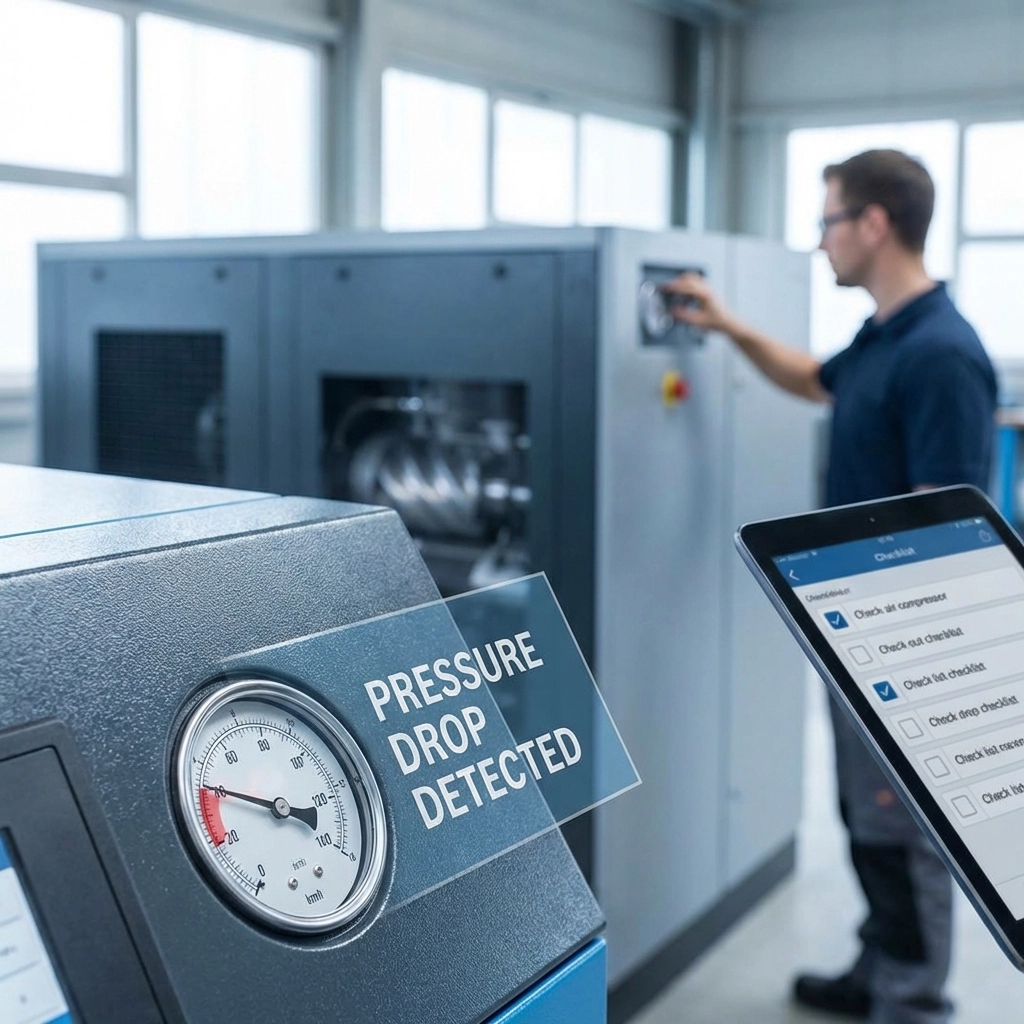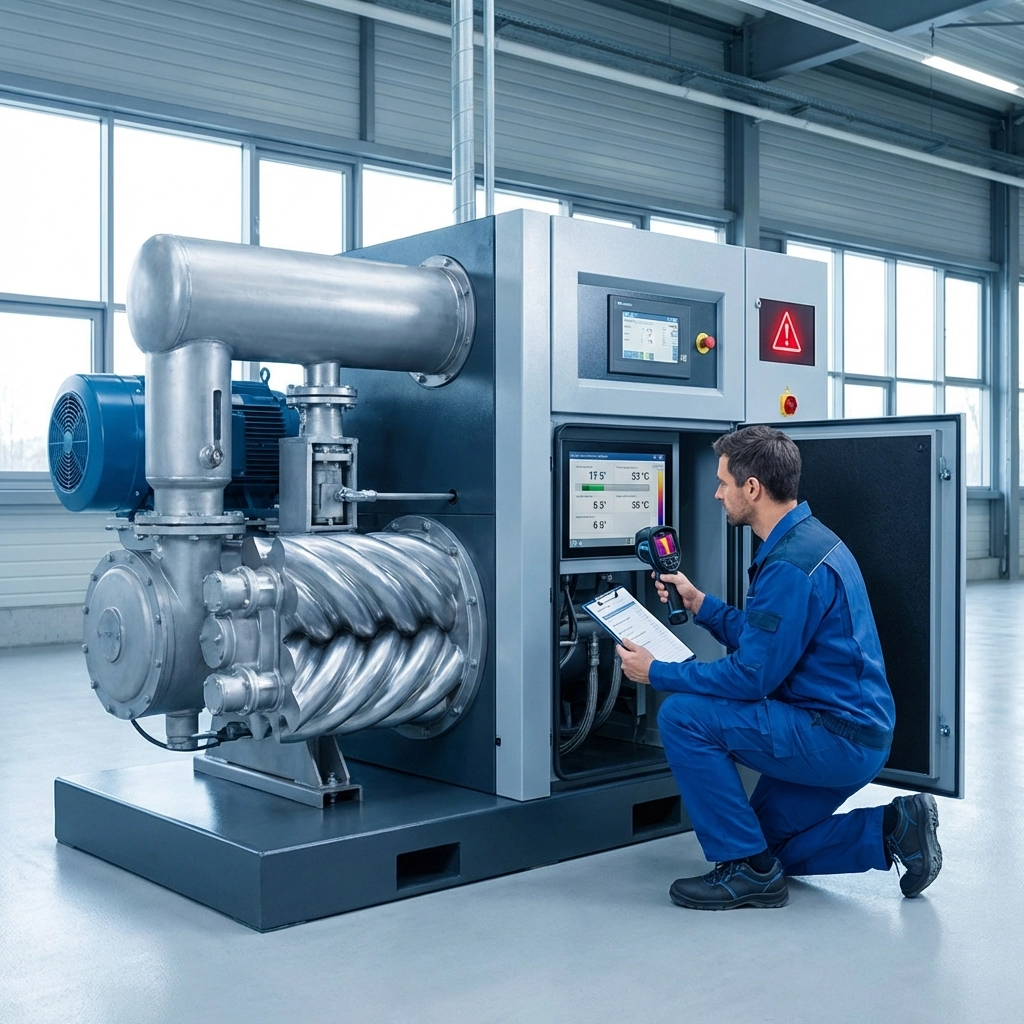
Stop Oversizing Your Compressor: 5 Sizing Mistakes Costing You Thousands
Every year, manufacturing facilities across the globe waste thousands of dollars on compressed air systems that simply do not match their actual production needs. The assumption that “bigger is better” leads plant managers down an expensive path of excessive energy consumption, accelerated wear, and unexpected downtime. At AirSpace Machinery, we see this pattern repeatedly: facilities investing in compressors two to five times larger than necessary, then wondering why their operating costs keep climbing.
This guide breaks down the five most common sizing mistakes and shows you exactly how proper demand assessment and tank sizing protect your bottom line. Whether you are specifying your first Energy-Efficient Air Compressor or replacing aging equipment, understanding these pitfalls saves real money.
Why Oversizing Creates a Chain Reaction of Problems
An oversized screw air compressor does not simply sit there consuming extra electricity. It triggers a cascade of mechanical and operational issues that compound over time. When a compressor runs at partial load or cycles on and off excessively, every internal component suffers. The inlet valve cycles more frequently. Motor bearings experience repeated start-up stress. Lubricant fails to reach proper operating temperature, allowing moisture to accumulate inside the compression chamber.
This moisture becomes the silent killer of compressor longevity. Water mixing with lubricant degrades bearing surfaces, causes rust on compressor screws, and contaminates your entire downstream air system. Facilities often discover these issues only when a full element replacement becomes necessary: an expense that proper sizing would have prevented entirely.
Mistake 1: Ignoring Actual Demand Profiles
The most fundamental sizing error starts with how facilities calculate their air demand. Many buyers simply look at the maximum CFM rating of all connected tools and equipment, add them together, and specify a compressor to match that total. This approach ignores a critical reality: not all equipment runs simultaneously.
Proper demand assessment requires measuring actual air consumption over time: ideally across different production scenarios. A facility running three shifts with variable loads needs a completely different solution than a shop with consistent eight-hour production cycles. Variable Frequency Drive (VFD) and Permanent Magnet Variable Frequency (PMV) screw compressors excel in variable-demand environments because they modulate output to match real-time consumption, delivering substantial energy savings compared to fixed-speed alternatives.
Conduct a compressed air audit before specifying equipment. Log pressure and flow data for at least two weeks across all operating conditions. This data reveals your true baseline demand, peak requirements, and the gap between them.
Mistake 2: Undersizing or Oversizing the Receiver Tank
Tank sizing directly impacts system stability and compressor cycling frequency. An undersized receiver tank forces your compressor to cycle more frequently to maintain pressure, increasing wear on valves, motors, and electrical components. Conversely, an excessively large tank paired with an oversized compressor creates extended idle periods where the machine never reaches optimal operating temperature.
The general guideline for fixed-speed screw compressors positions receiver capacity at approximately 3 to 5 gallons per CFM of compressor output. For VFD and PMV units, this ratio can be reduced because the compressor modulates rather than cycling. However, applications with high intermittent demand: such as laser cutting or sandblasting: benefit from larger storage capacity to buffer peak consumption without forcing the compressor into maximum output.
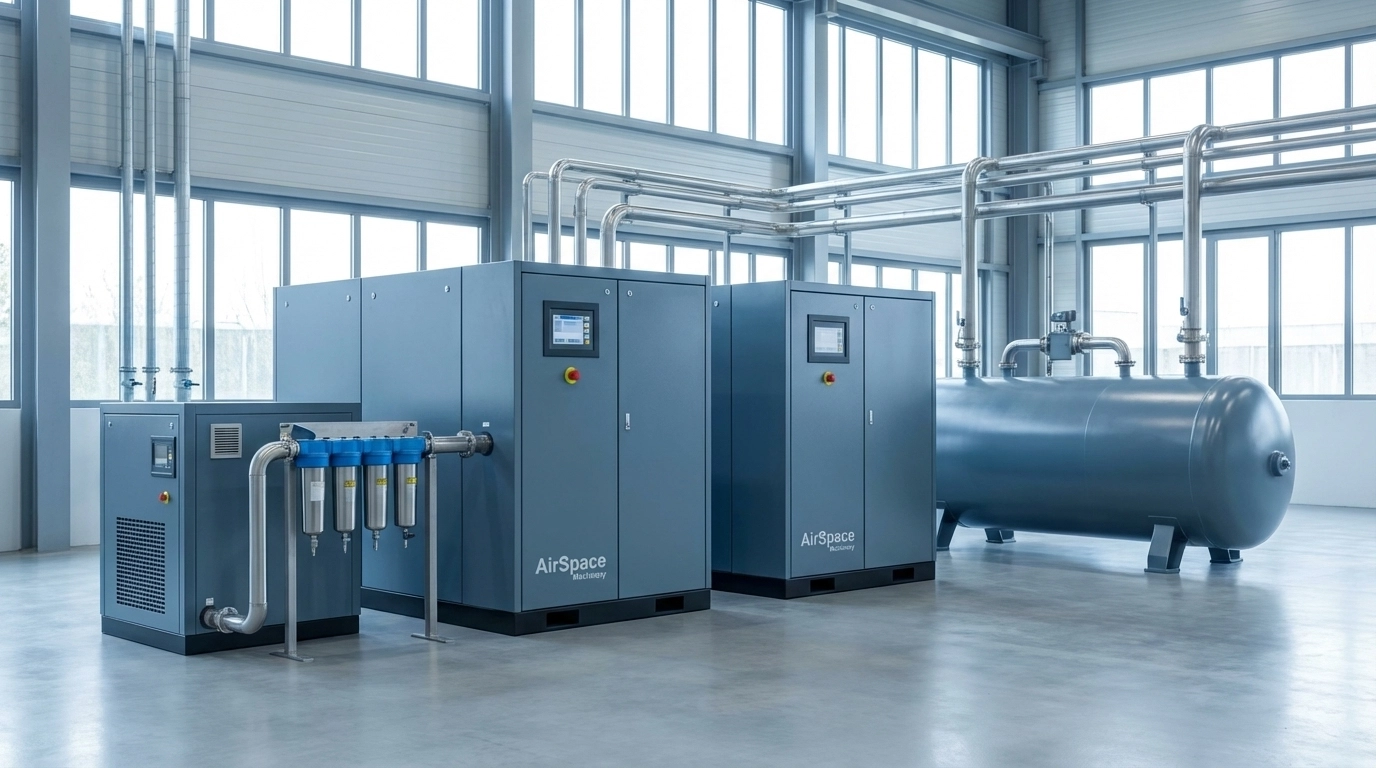
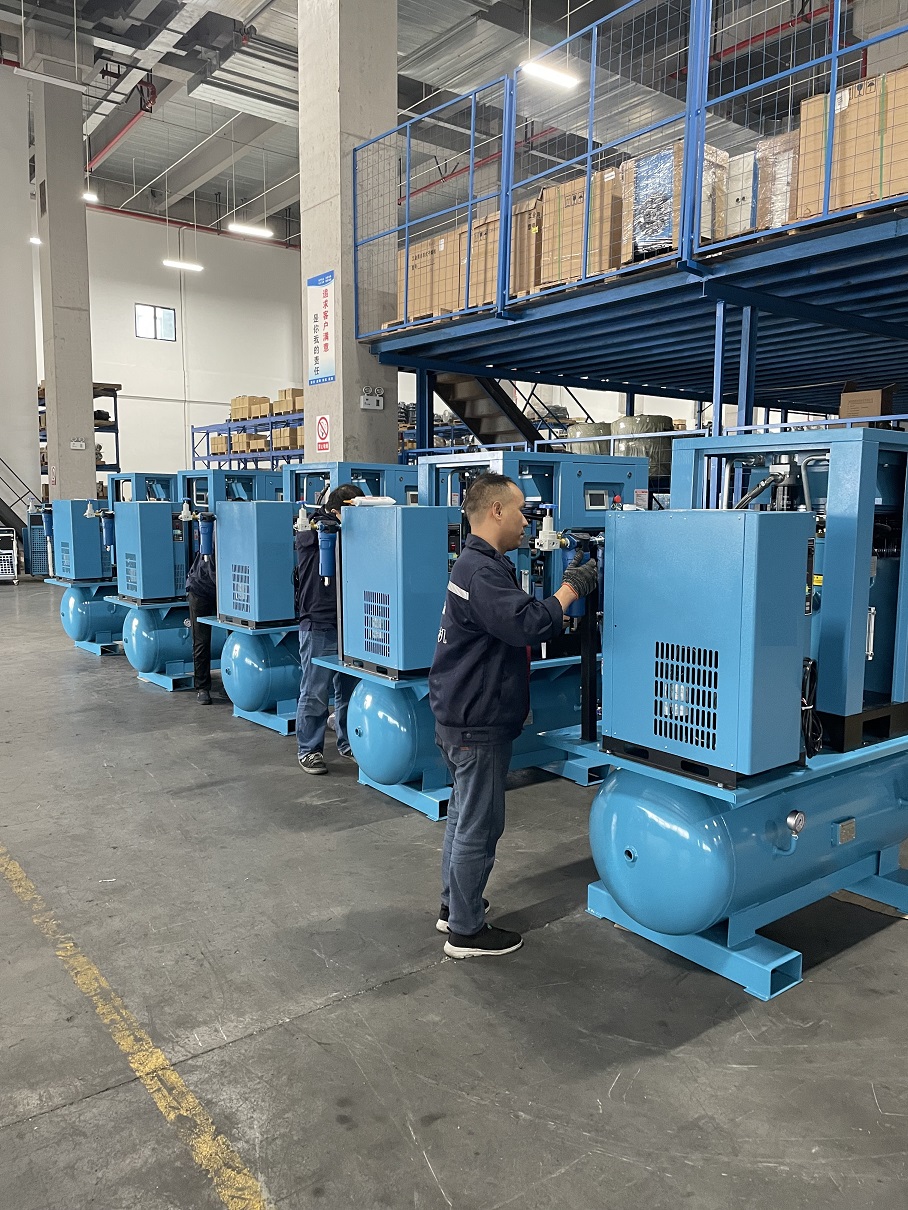
Integrated tank-and-compressor packages simplify this calculation for smaller installations. These all-in-one systems from AirSpace Machinery match compressor output to tank volume at the factory, eliminating guesswork and ensuring stable pressure delivery from day one.
Mistake 3: Specifying for Peak Demand Without Considering Average Load
Peak demand represents the maximum air consumption your facility experiences: often for only minutes per day. Sizing your compressor exclusively for this peak guarantees that the machine runs at low utilization the remaining 90 percent of operating hours. This low utilization translates directly into wasted energy and accelerated component wear.
A more cost-effective approach combines a properly sized base-load compressor with either a smaller trim unit or VFD technology to handle peaks. The base-load machine runs efficiently at high utilization, while the secondary system covers demand spikes. This configuration reduces energy consumption per unit of compressed air produced and extends service intervals across both machines.
For facilities where peaks are brief and infrequent, a larger receiver tank may absorb the spike without requiring additional compressor capacity. Demand profiling reveals whether peaks are predictable (shift changes, specific process cycles) or random, guiding the optimal combination of compressor capacity and storage volume.
Mistake 4: Overlooking Pressure Drop Calculations
Specifying a compressor at the correct CFM means nothing if pressure drops between the compressor and point of use. Every filter, dryer, regulator, and meter in the distribution system creates resistance. Undersized piping, corroded fittings, and excessive elbows compound these losses. Facilities often compensate by increasing compressor discharge pressure: burning more energy to overcome distribution inefficiencies.
Before sizing your Energy-Efficient Air Compressor, map the entire distribution network. Calculate expected pressure drop at each component and across piping runs. Industry guidelines recommend keeping total system pressure drop below 10 percent of compressor discharge pressure. If your current system exceeds this threshold, upgrading piping or replacing restrictive components may deliver better ROI than simply adding compressor capacity.
Pressure transmitters at the compressor discharge and at critical use points reveal exactly where losses occur. This data supports targeted upgrades rather than blanket over-specification of the compressor itself.

Mistake 5: Failing to Account for Future Capacity Needs
Sizing exclusively for current demand creates problems when production scales. Adding equipment, extending shifts, or introducing new processes increases air consumption. If the original compressor has no headroom, facilities face either insufficient pressure during peaks or an unplanned capital expenditure for replacement equipment.
The solution balances current efficiency against future flexibility. VFD and PMV screw compressors handle this balance elegantly: they modulate down efficiently when demand is low and ramp up as requirements grow. Specifying a unit with 15 to 20 percent capacity above current peak demand provides growth headroom without significant efficiency penalties.
Alternatively, design the compressed air room with space and utilities for a future trim compressor. This approach keeps the base-load machine right-sized for current needs while simplifying future expansion.
The Real Cost of Getting It Wrong
Industry data shows that energy accounts for approximately 70 percent of a compressor’s total cost of ownership over its lifespan. An oversized machine running at low utilization consumes more kWh per cubic meter of air delivered than a properly sized alternative. Multiply this waste across years of operation and the numbers become substantial.
Beyond energy, oversizing drives up maintenance frequency and part replacement costs. Service intervals on screw compressors are based on run hours, not load hours. A compressor running 4,000 hours per year at 40 percent load costs the same in routine service as one running at 80 percent load: but produces half the useful output.
Production losses from pressure fluctuations add another layer. Modern manufacturing equipment often includes pressure sensors that trigger shutdowns if supply falls outside specification. Oversized compressors cycling between load and idle create exactly these pressure swings, causing defective products and unplanned downtime.
How to Get Sizing Right the First Time
Start with data. Measure actual demand across all operating scenarios before contacting suppliers. Provide this data: pressure requirements in bar or psi and flow requirements in cubic meters per minute or CFM: when requesting proposals. Reputable manufacturers use this information to recommend equipment that matches your application rather than simply quoting the largest unit in their catalog.
At AirSpace Machinery, our engineering team reviews demand profiles and recommends compressor and tank configurations optimized for your specific production environment. Every unit ships with CE and ISO 9001 certification and a control panel providing real-time performance data for ongoing optimization.
Ready to Stop Wasting Money on Oversized Equipment?
Proper sizing protects your investment from day one. Get a Proposal from AirSpace Machinery today. Provide your pressure and flow requirements, and our team will recommend an Energy-Efficient Air Compressor configuration matched to your actual demand: not an arbitrary safety margin that costs you thousands every year.
Visit our product catalog at https://www.chinacompressor.org to explore our complete range of Permanent Magnet Variable Frequency screw compressors and integrated tank systems.
Sources and Standards
Energy consumption and lifecycle cost estimates referenced in this article align with guidance from the Compressed Air and Gas Institute (CAGI) and general industry benchmarks for industrial screw compressor applications. Pressure drop recommendations follow ISO 8573-1 compressed air quality standards and CAGI best practices for distribution system design. Specific operational data reflects field observations from AirSpace Machinery’s engineering and service teams.
Reviewed by Engineering
Author: Penny Winston | AirSpace Machinery